Women
New Delhi, September 17, 2026: For years, conversations around menstrual health in India have often begun and ended with one question: Do women have access to sanitary products?A new study from Rajasthan suggests that the question may be too narrow.Among 2,759 women surveyed in rural communities in north-western India, researchers found that many had access to menstrual materials, water and basic facilities at home. Yet that did not mean their menstrual needs were fully met.Problems remained around disposing of used menstrual products, keeping enough supplies available, dealing with leakage and maintaining privacy while washing or drying reusable materials. The situation was particularly concerning in educational settings, where privacy and sanitation facilities were among the weakest areas identified by the study.Published in Discover Public Health on September 11, the research used the Menstrual Practice Needs Scale-36 (MPNS-36) to look beyond whether women simply had a menstrual product. Researchers assessed several aspects of menstrual experience, including material access, hygiene, privacy, reuse, disposal and insecurity.And that distinction matters.
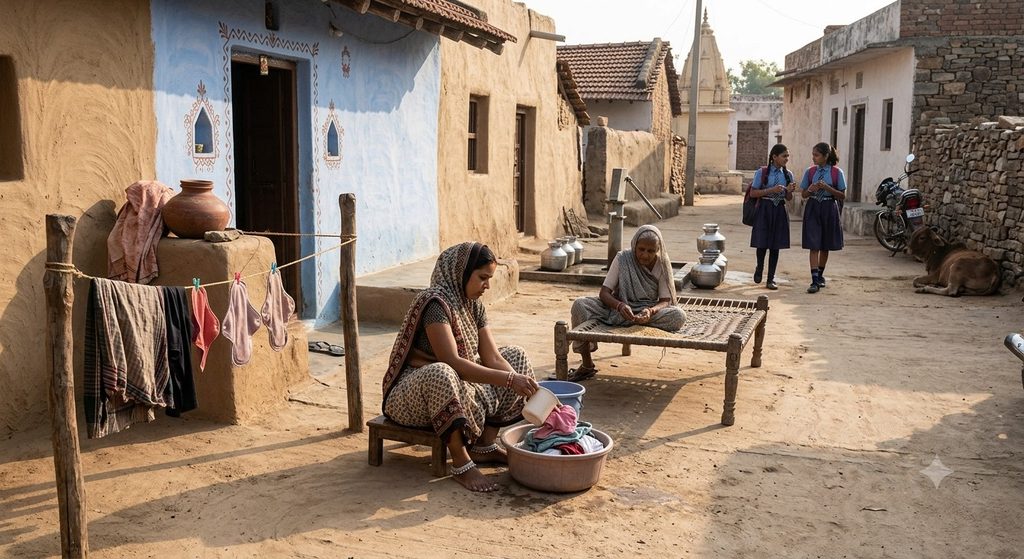
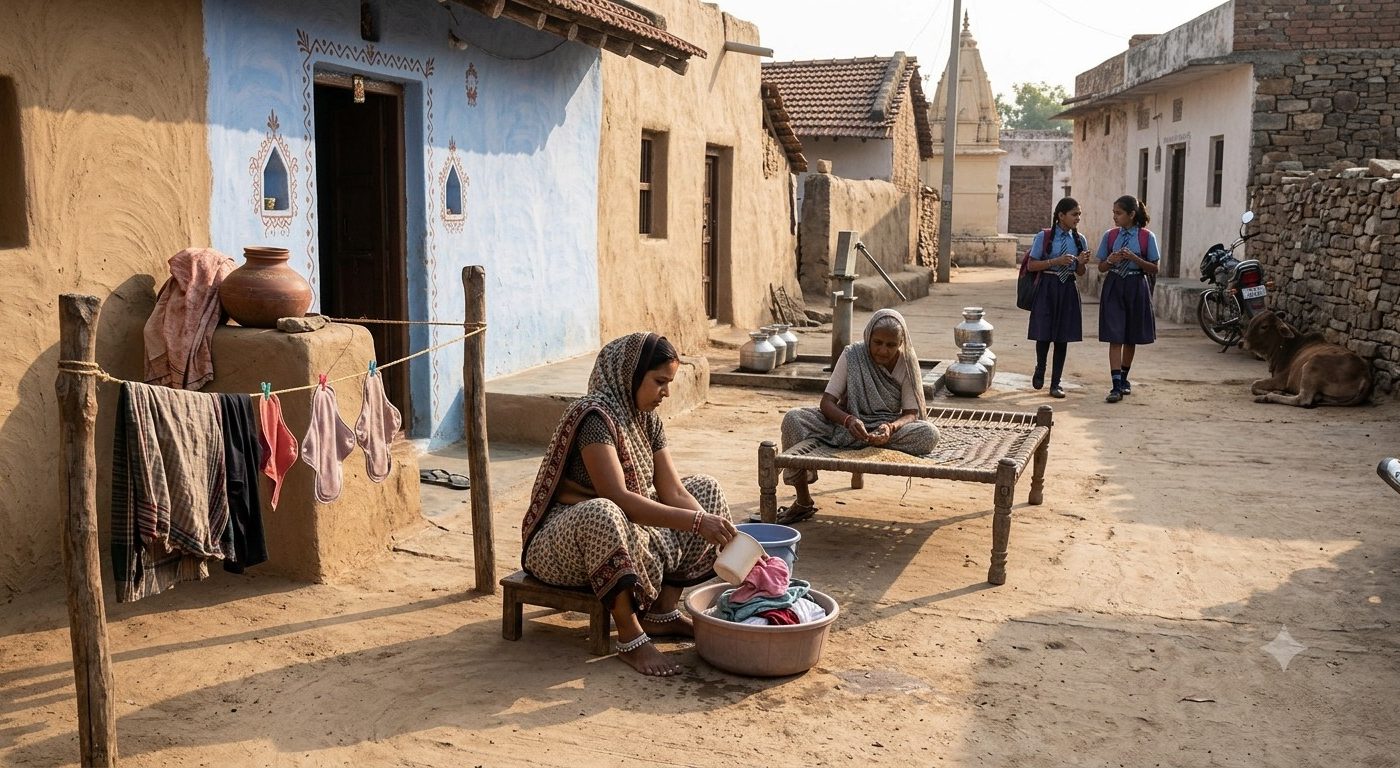
The findings challenge the idea that menstrual health can be measured simply by counting how many women use sanitary pads.In the Rajasthan study, sanitary pads were the most commonly used menstrual absorbent, but around one in four participants still relied on cloth. At the same time, the researchers found that many women had reasonably supportive conditions at home, including access to water, soap and places to change menstrual materials.Yet the experience was far from problem-free.Disposal received the lowest scores among the menstrual-health domains assessed. Women also reported concerns about leakage, menstrual materials shifting out of place and the possibility of running out of products.For women who wash and reuse menstrual materials, privacy presented another challenge. The study found concerns about being seen while washing or drying such materials, even when water and washing facilities were available.In other words, access to water is one part of the equation. Having a private, acceptable place to use that water is another.
One of the clearest findings concerned menstrual management in schools and other educational institutions.The researchers identified school-based menstrual hygiene management as the most compromised area, with limited privacy and inadequate sanitation facilities reported in educational settings.This raises a question that is often missing from conversations about menstrual products:
What happens when a girl gets her period while she is away from home?A menstrual product may be available, but can she change it privately?Is there water?Is there soap?Is the toilet usable?Can she dispose of the used product safely?And what happens if she experiences heavy bleeding or leakage during the school day?These practical questions can determine whether menstruation remains a routine biological process or becomes a source of anxiety, embarrassment and disruption.
Another finding deserves attention: having access to menstrual products does not necessarily mean women have secure access to them.The study identified concerns about leakage and running out of menstrual materials.That means affordability and availability need to be considered over the entire menstrual cycle, rather than simply asking whether a woman uses a particular product.A woman may have enough supplies most months but struggle when her period is heavier or lasts longer than expected. Another may have access to pads but hesitate to use additional ones because she worries about running out before the next purchase.This is where the concept of menstrual dignity becomes important.It is not only about having something to absorb menstrual blood. It is about being able to manage menstruation safely, privately, comfortably and without fear of embarrassment.
The study also offers an important caution against treating rural women as one homogeneous group.The research was conducted among women living around a tertiary teaching hospital in Rajasthan, with participants recruited through healthcare facilities, schools, colleges and community health camps. The researchers themselves noted that the study’s cross-sectional design and limited urban representation mean the findings should not automatically be generalised to all women across India.Still, the study provides a useful window into the everyday realities of menstrual management in rural north-western India.It also demonstrates why measuring menstrual health requires more than asking whether a woman uses a sanitary pad.
The researchers argue that improving menstrual health requires better water, sanitation and hygiene infrastructure, safe disposal systems, affordable access to menstrual products and continued menstrual-health education.But the findings also point towards a broader shift in how menstrual health is discussed.The goal should not simply be to move women from one menstrual product to another.It should be to create environments where a woman or girl can change her menstrual material without fear, wash when she needs to, dispose of used products safely, obtain additional supplies when necessary and continue her daily activities without shame.Because a period does not happen only inside a bathroom at home.It happens in schools, workplaces, fields, factories, buses, hospitals and public spaces.And that means menstrual health is not just a question of what a woman has in her bag.It is also a question of what the world around her allows her to do.The study, “Assessment of menstrual hygiene practices and unmet menstrual needs in rural women using the Menstrual Practice Needs Scale 36 (MPNS36),” was published in Discover Public Health on September 11, 2026. It surveyed 2,759 participants in rural communities in Rajasthan and used the MPNS-36 framework to assess different dimensions of menstrual-health needs.