Women
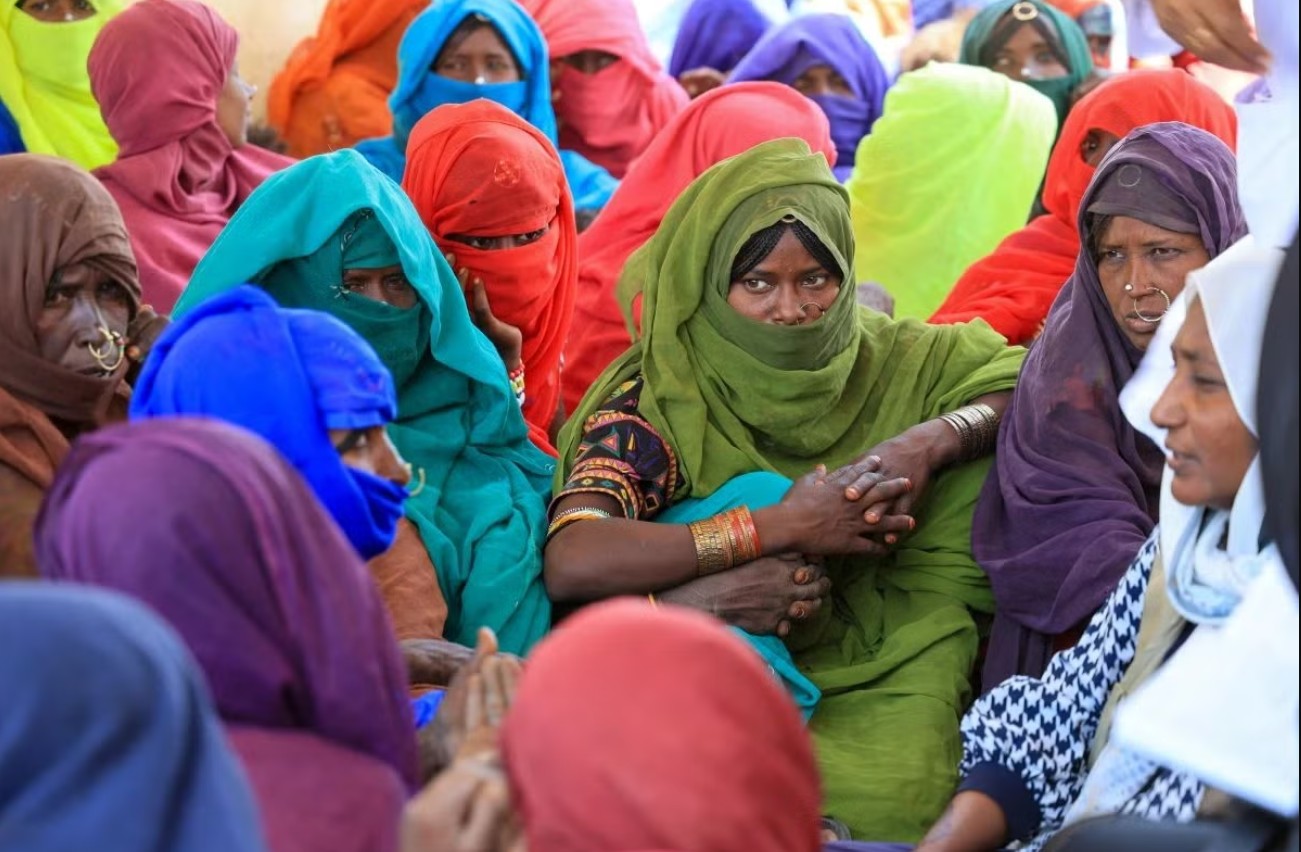
Amid displacement, loss and violence, two young Sudanese women are showing how women can turn shared trauma into community support, leadership and peacebuilding.
Zenana MediaSudan, September 15, 2026: When war tears apart a community, survival can become an individual struggle. For many women in Sudan, however, surviving has also meant finding ways to help others survive.Across displacement camps and communities affected by conflict, women are supporting survivors, sharing information, connecting people with essential services and creating spaces where others can speak about their experiences.The stories of Eshtiyag Ali and Majeeda Al Nour, both 27, offer a glimpse into this less visible side of Sudan’s war: how women who have themselves experienced displacement and loss are stepping forward to support other women and help rebuild their communities.Their experiences were highlighted by UN Women on September 15.
Ali was living in Khartoum and volunteering on women’s rights and community initiatives when fighting erupted in April 2023.For two weeks, gunfire became part of her daily life. Eventually, her family fled, with Ali and her brothers travelling towards White Nile State while her father went to Al Jazirah State.The separation became permanent.Ali’s father fell seriously ill and was being treated in a hospital in Al Jazirah when the facility came under attack. His condition deteriorated, and he eventually fell into a coma.Ali tried to reach him but could not enter the area because it had come under siege.Her father died before she could see him again.The conflict had taken away her home, her sense of normality and, ultimately, her father.But Ali did not abandon her work with women.
Al Nour’s journey was similarly marked by violence and displacement.Before the war reached her village in eastern Al Jazira State, she had completed university and was preparing to pursue a master’s degree in art.In December 2023, her family was forced to flee.They walked for two nights looking for safety. During the journey, Al Nour witnessed the death of her brother and saw the suffering of women, girls and older people.She eventually spent five months in a displacement camp in River Nile State.Safety did not erase what she had experienced.Inside the camp, she encountered other women carrying their own stories of loss, fear and violence.Instead of allowing those experiences to isolate them from one another, Al Nour began bringing women together.They talked.They shared what had happened to them.And they encouraged each other to confront their fears and regain confidence.It was an informal form of support, but its significance was larger: women who had lost control over so much of their lives were creating a space where they could once again be heard.
Both women eventually moved beyond informal community support into more structured leadership roles.Ali participated in UN Women’s Women’s Leadership Empowerment Programme, where she learned about the Women, Peace and Security agenda and the role women can play in mediation, negotiation, conflict resolution and peacebuilding.The training gave her tools to take that work back into her community.Her goal now is not simply to use what she has learned herself, but to pass it on to other women.Al Nour’s path was different.While living in the displacement camp, she met Mariam Adam, head of El Ruhama for Development and Humanitarian Aid, a community-based organisation working with UN Women.Adam noticed Al Nour’s commitment to supporting survivors of gender-based violence.Al Nour was subsequently given a coordination role in a UN Women-supported project and now works in community outreach.Her own experience of displacement became part of what enabled her to connect with other women facing similar circumstances.
The stories of Ali and Al Nour do not suggest that women should simply be expected to endure more.Their experiences point to something different: women need opportunities, networks and resources to turn their knowledge of their communities into leadership.In conflict situations, women are often among those most affected by displacement, insecurity and violence. But they are not only victims of conflict.They can also be mediators, organisers, advocates, community leaders and peacebuilders.And sometimes the first support comes not from a formal institution, but from another woman who understands the fear because she has lived through it herself.That connection can be particularly important for survivors of gender-based violence, who may face stigma or barriers when trying to access support.
Peacebuilding is often associated with governments, armed groups and formal negotiations.But Ali and Al Nour’s experiences illustrate another side of it.It can begin with a conversation between displaced women.It can mean connecting a survivor with a service provider.It can mean helping someone understand where to seek assistance.It can mean teaching another woman how to participate in mediation.And it can mean creating a community in which women who have experienced violence do not have to carry their stories alone.UN Women, with support from partners including the Swedish International Development Cooperation Agency (Sida) and the Women’s Peace and Humanitarian Fund, is working with women’s organisations and community groups in Sudan to strengthen women’s leadership, peacebuilding skills, psychosocial support and economic empowerment.These efforts are intended to give women greater access to the skills, networks and resources needed to participate in recovery and peacebuilding.
There is a danger in turning stories of women in war into stories only about resilience.Resilience should not become an excuse for accepting suffering.Sudanese women should not have to be extraordinarily strong simply because their circumstances demand it.The more important lesson from Ali and Al Nour may be that when women are given space, resources and opportunities to lead, their impact can extend far beyond their own lives.They support other survivors.They share knowledge.They build networks.They strengthen communities.And they become part of shaping what comes after the violence.For Sudanese women living through one of the world’s most devastating conflicts, peace may still seem distant.But in communities where women are helping one another stand again, some of the foundations for that future are already being built.
Photo Source: UN Women