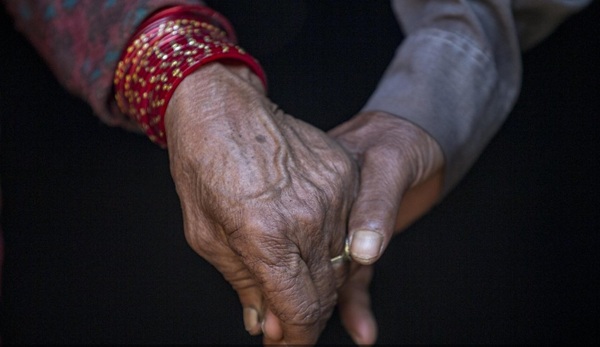
Women’s rights do not stop mattering when women grow older. Yet violence against older women often remains hidden behind assumptions about ageing, family relationships and dependence on others for care, according to a new United Nations report calling for stronger legal protection and better access to justice.
Reem Alsalem, the UN Special Rapporteur on violence against women and girls, warned in a report presented to the UN General Assembly that older women face physical, psychological, sexual and economic violence, as well as neglect, abandonment and exploitation. Their experiences, she said, frequently remain overlooked in laws, public policies, research and support services.
The report, Violence against older women, comes as the number of older women worldwide continues to grow. An estimated 664 million women were aged 60 or above in 2025, a figure projected to reach 1.13 billion by 2050.
The report argues that violence against older women must be recognised as a distinct human rights concern rather than treated simply as an inevitable part of ageing or a private family matter.
Abuse can continue into old age
Violence against women is often discussed in the context of younger women, intimate partner relationships or reproductive health. Older women, however, may experience abuse in different circumstances, including within their own homes, care institutions and relationships in which they depend on others for daily assistance.
The UN report identifies physical abuse, psychological harm, sexual violence, coercive control, neglect and abandonment among the forms of violence experienced by older women. Economic abuse can include the exploitation of pensions, savings and property, or restrictions on a woman’s ability to control her own money.
Older women may also be denied healthcare, assistive devices or other essential services. Digital exclusion can create further barriers when access to benefits, medical appointments or complaint mechanisms increasingly depends on smartphones, online accounts or digital identification.
Dependence on a relative or caregiver can make these situations especially difficult to escape. When the person providing assistance also controls access to money, services or communication, reporting abuse may become more complicated.
The report also warns that violence experienced earlier in life can have lasting consequences. Women who have spent decades facing discrimination, financial dependence or abuse may enter old age with fewer resources and limited access to support.
Why older women remain invisible
A central concern raised in the report is that older women are often missing from the evidence used to shape policies and services.
Many demographic and health surveys focus on women of reproductive age, generally between 15 and 49, leaving older age groups outside important data collection exercises. The report cites a global review of 392 studies on sexual violence in which only 66 included any data on women aged 50 or older.
This lack of evidence makes it harder to understand the scale and nature of abuse affecting older women, identify those at greatest risk and assess whether support systems are working.
Social attitudes also contribute to the problem. Older women may be expected to tolerate difficult family relationships, remain silent about abuse or accept restrictions on their independence because of their age.
The intersection of sexism and ageism can make their experiences particularly difficult to recognise. Violence may be dismissed as a domestic disagreement, the consequences of illness or simply part of growing old.
Sexual violence against older women is especially under-recognised, the report notes, partly because persistent stereotypes wrongly assume that older women are not affected by sexual abuse.
These assumptions can influence not only public attitudes but also whether institutions recognise a complaint as serious and provide an appropriate response.
Financial dependence can increase vulnerability
Economic insecurity is another major concern. Older women who have had fewer opportunities to earn, own assets or accumulate savings may be more dependent on family members for housing, healthcare and everyday expenses.
Widows, rural women, women with disabilities, migrants, stateless women and those living in institutions are among the groups the report identifies as facing particular risks.
For a woman whose pension or property is controlled by someone else, financial exploitation may also limit her ability to seek independent accommodation or legal assistance.
The report links these vulnerabilities to inequalities accumulated throughout life, including unequal access to education, employment, social protection and property.
Women who spent years performing unpaid care work may reach old age without the same financial security as people who had continuous paid employment. The consequences can become more severe when they lose a spouse, experience declining health or require assistance with daily activities.
The problem is therefore not only whether laws prohibit abuse. It is also whether older women have the resources and practical support needed to exercise their rights.
Support services may not be designed for older women
The UN expert also raises concerns about services that do not adequately account for older women’s needs.
Programmes addressing violence against women may be designed primarily around younger women or those of reproductive age. Shelters and other services may prioritise women with minor children, leaving older women with fewer suitable options when they need to escape abuse.
Healthcare services may also fail to address older women’s specific needs, while poorly designed complaint systems can make reporting difficult for women with disabilities, limited mobility or little experience using digital platforms.
When older women are excluded from research, prevention programmes and public discussions, their needs can remain low on policy agendas.
The report cites an analysis estimating that only 0.1% of gender-equality-focused spending specifically includes older women. This highlights a wider concern about whether resources are reaching a group that faces overlapping disadvantages.
What the UN expert wants governments to do
The report calls on governments to recognise and address violence against older women explicitly in laws, national strategies and prevention programmes.
It also recommends collecting data that distinguish experiences by both age and sex, improving access to reporting and justice mechanisms, and training police, judicial officials, healthcare professionals and social-service workers to recognise and respond to abuse affecting older women.
Support systems must be accessible to women who have mobility limitations, disabilities or difficulty navigating digital services. Women should also be able to obtain assistance without being entirely dependent on the person who may be controlling or abusing them.
The report stresses the need to protect older women’s autonomy, dignity and participation in public life. Their views should not be assumed to be represented by relatives or caregivers, and decisions affecting them should respect their rights and individual circumstances.
These recommendations address a basic gap in how violence against women is understood: protection must extend across the entire life course.
Age should not determine whose rights are protected
The growing number of older women makes the issue increasingly important for governments, healthcare systems and social-protection programmes. But demographic change alone does not explain why abuse remains overlooked.
The report points to the interaction of discrimination, economic insecurity, inadequate services and gaps in data as factors that can leave older women without effective protection.
Recognising the problem requires more than treating older women as a vulnerable population. It means recognising them as individuals with rights to safety, financial autonomy, healthcare, dignity and justice.
For women who have spent a lifetime navigating unequal opportunities, old age should not bring a new form of invisibility. The UN report’s central warning is that protection from violence must not diminish as women grow older.