From challenging menstrual-health stigma in Rajasthan to speaking about personal safety in Madhya Pradesh, girls are turning education and life skills into community action. But lasting empowerment also requires choices, opportunities and support beyond the classroom.
For a girl growing up in a community where early marriage is common, continuing her education can mean more than completing another school year. It can give her time to make decisions about her future, access information about her health, and build the confidence to question expectations placed on her.
But what happens after a girl receives that opportunity? Does she gain the confidence to speak up? Can she influence decisions in her family and community? And does the support she receives at school translate into greater independence as she grows older?
Recent stories published by the United Nations Population Fund (UNFPA) in India offer a glimpse of what can happen when girls receive life-skills education, health information and opportunities to participate in their communities.
A photo essay published on October 21, 2026, documents three initiatives involving schoolgirls in Madhya Pradesh, Rajasthan and Bihar. A separate UNFPA article published on October 18 follows young women in Maharashtra who experienced child marriage and later moved towards very different futures.
Together, the accounts offer a useful perspective on what support can make possible—and why keeping girls in school is only one part of the larger task.
1. Bhopal: A school play becomes a lesson in personal safety
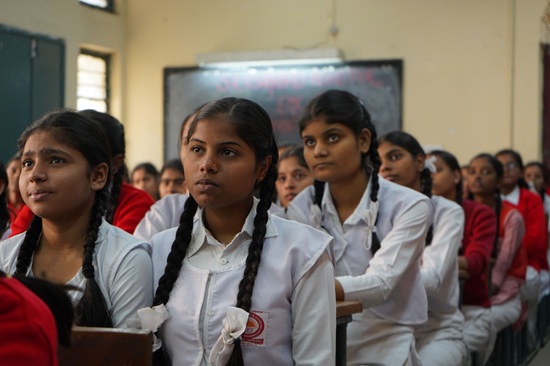
In Bhopal, Madhya Pradesh, schoolgirls used a puppet show to discuss personal safety, recognise abuse and explain protections available under the Protection of Children from Sexual Offences (POCSO) Act.
The initiative, documented in UNFPA India’s October photo essay, shows how life-skills education can move beyond conventional classroom instruction.
For children and adolescents, understanding personal safety involves more than knowing that abuse is wrong. It also requires being able to recognise unsafe situations, understand personal boundaries and know where to seek help.
Creative activities such as school plays can provide a way to introduce difficult subjects in a format that young people can understand and discuss with their peers.
The significance of this approach lies in the possibility of making girls participants in conversations about their own safety, rather than treating them only as recipients of information.
However, awareness alone cannot guarantee protection. Girls also need trusted adults, accessible reporting mechanisms and institutions that respond appropriately when they raise concerns.
The Bhopal example therefore raises a broader question for schools: are life-skills lessons connected to reliable support systems that students can turn to when they need help?
2. Dholpur: Girls take menstrual-health conversations beyond school
In rural Dholpur, Rajasthan, five schoolgirls formed a peer group called Aap Ki Sakhi to challenge stigma surrounding menstrual hygiene.
According to UNFPA, the girls eventually took their campaign from their immediate group to households in their community during the summer holidays.
The initiative illustrates how knowledge acquired through education can become a tool for community engagement.
Menstruation remains a subject that can be difficult for girls to discuss openly in some families and communities. Silence and misinformation can affect how young people understand their bodies, manage their health and seek assistance when they need it.
Peer-led initiatives offer one way to make these conversations more accessible. Girls may find it easier to ask questions or discuss concerns with someone of a similar age, particularly when the subject has traditionally been treated as private or embarrassing.
The Dholpur example also demonstrates a shift in the role girls can play. They are not simply learning about menstrual health; they are helping take that information to other households.
Such participation can create opportunities to develop communication skills, confidence and a sense of responsibility towards the wider community.
Yet the longer-term impact needs to be assessed through more than the number of conversations held. It would be important to establish whether the initiative improved access to accurate information, helped girls manage menstruation at school and reduced the stigma they encountered.
Access to suitable toilets, water, menstrual products and reliable health advice remains essential. Awareness campaigns cannot substitute for these practical requirements.
3. Bihar: A student overcomes stage fright to become a health messenger
The third account in the October 21 photo essay follows Sapna, a Class 10 student in Bihar who struggled with severe stage fright.
After receiving intensive training on nutrition and mental health, she became a Health and Wellness Messenger and spoke at a major event in Delhi, according to UNFPA.
Her journey highlights a less visible dimension of education: the development of confidence and the ability to communicate.
Academic performance is often used to assess a student’s progress, but young people also need opportunities to express their views, ask questions and participate in public life.
For a student who experiences anxiety about speaking before others, moving from silence to addressing an audience can represent a significant personal step.
When schools create supportive environments for such development, students can learn to communicate information, collaborate with peers and take on responsibilities beyond their regular lessons.
The important distinction is that confidence should not be treated as a fixed personality trait that some girls possess and others lack. It can develop when students receive encouragement, practical opportunities and an environment in which mistakes are not met with humiliation.
Sapna’s story provides an example of what that support can make possible. Further information about her subsequent education, continued participation and personal goals would help establish how the experience has influenced her longer-term journey.
Beyond the classroom: Three young women in Maharashtra
The importance of continued support becomes even clearer in UNFPA India’s October 18 account of young women from Beed, Maharashtra, who had experienced child marriage.
The organisation describes three different outcomes: one woman is now a nurse, another is continuing her education after her family and UNFPA intervened to stop her marriage, and a third runs her own salon.
Their experiences demonstrate that there is no single route towards a more independent life.
For one woman, professional training has led to a career in healthcare. For another, the opportunity to continue studying has kept educational possibilities open. For the third, running a salon offers a route into self-employment.
These outcomes should not be treated as interchangeable measures of success. Each represents a different stage and form of agency, shaped by individual circumstances and the opportunities available.
The accounts also underline the importance of intervention at the right time. UNFPA describes the role of a health worker, family support and programmes in helping the women move towards different futures.
Preventing a child marriage or enabling a girl to continue her education can create an opportunity. Sustaining that opportunity requires further support, including access to education, skills, healthcare and ways to earn an income.
The next question is what happens after the intervention: whether the woman can continue making decisions for herself, maintain her livelihood and access the services she needs.
What the wider picture tells us
The challenges facing girls cannot be understood through individual stories alone. National data can help show whether the conditions that shape their choices are changing.
In its October 18 article, UNFPA cited National Family Health Survey figures indicating a decline in child marriage and improvements in girls’ school attendance, women’s access to bank accounts and participation in household decisions.
The organisation also highlighted a slower improvement in women’s ability to earn their own income.
This distinction matters. Educational access, financial inclusion, participation in decisions and paid work are related, but progress in one area does not automatically produce progress in all the others.
A girl may remain in school but have little say in decisions about her future. She may acquire health knowledge without access to confidential services. As an adult, she may have a bank account but lack an independent income.
For this reason, programmes intended to support girls need to be assessed across several dimensions, rather than relying on enrolment figures or isolated success stories.
It is also important to distinguish between a programme’s immediate outputs and its longer-term outcomes. A school play, peer group or training session can demonstrate participation. Whether these activities lead to lasting changes in knowledge, behaviour, educational attainment or independence requires follow-up.
What schools and communities need to do next
The experiences documented by UNFPA suggest several priorities for institutions working with adolescent girls.
First, life-skills education needs to be consistent and accessible. A girl should not have to rely on an isolated workshop to receive reliable information about personal safety, health and decision-making.
Second, schools need trusted adults and clear systems for responding to concerns. Awareness of abuse or rights is meaningful only when children know where they can seek help and can expect an appropriate response.
Third, peer-led initiatives should receive continued support. Girls who take on community roles need accurate information, guidance and opportunities to participate without being burdened with responsibilities that should belong to adults and institutions.
Fourth, educational support must connect with future opportunities. Access to secondary and higher education, vocational training, digital skills and decent work can help girls translate knowledge and confidence into greater economic independence.
Finally, programmes should follow up with participants over time. Tracking whether girls continue studying, enter employment, participate in decisions and access essential services can help governments and implementing organisations understand which interventions produce lasting results.
Supporting girls means protecting their choices
The girls in Bhopal, Dholpur and Bihar are at different stages of learning how to participate in their communities. The young women in Beed demonstrate how opportunities can develop into professional work, continued education or self-employment.
Their experiences are encouraging, but they should not obscure the wider challenges facing girls who lack access to supportive schools, responsive institutions or families willing to protect their choices.
Nor should individual success stories be taken as proof that a programme has solved the underlying problems of child marriage, gender inequality or limited economic opportunities.
The more important lesson is that support must continue as girls move from school into adulthood. Education can provide knowledge, life-skills programmes can strengthen confidence, and community participation can create opportunities to speak and act.
But lasting independence also depends on whether girls can continue learning, make decisions about their lives, access healthcare and build livelihoods without being pushed back into restrictive circumstances.
Keeping girls in school is a vital beginning. Ensuring that they retain the freedom and opportunity to decide what comes next is the larger test.