Women

The unpaid work of caring for families does not end when the dishes are done. For millions of women, the real burden is the endless mental checklist running in the background — from school admissions and vaccinations to meals, medicines and ageing parents.
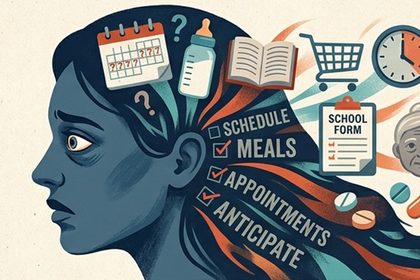
New Delhi, September 17, 2026: Is there enough food at home? Has the child’s vaccination been scheduled? Who will look after an ageing parent? Has the school form been submitted? What will everyone eat tomorrow?These questions may never appear on a household’s to-do list, but someone has to remember them, plan them and make sure they get done.Across households, that invisible responsibility often falls disproportionately on women.UN Women describes this as the “mental load” — the mental and emotional labour involved in anticipating needs, organising tasks, delegating responsibilities, following up and making sure that everyday life continues to function.It is care work that is rarely visible precisely because, when it is done well, nothing appears to go wrong.
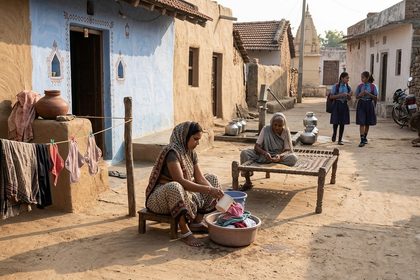
Care work is often reduced to visible tasks such as cooking, cleaning, feeding children or caring for an older family member. But the work begins long before those tasks are performed.Someone has to notice that groceries are running low, remember a child’s medical appointment, arrange care for a sick relative, plan meals, keep track of school requirements and coordinate everyone’s schedules.That constant monitoring is part of the mental load.UN Women notes that this invisible labour can involve parents, adult children caring for ageing relatives, partners managing households and people looking after the wellbeing of their wider communities.It can even include remembering to check on a neighbour during extreme heat or organising a workplace gathering.The common factor is that the responsibility is often difficult to measure — and therefore easy to overlook.
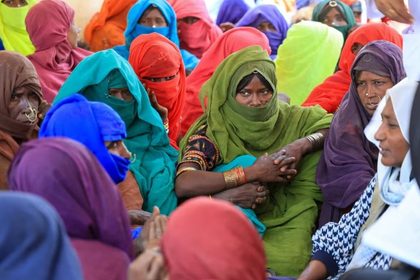
According to UN Women, women continue to perform the majority of unpaid care and domestic work in families and communities.One reason is the persistence of gender stereotypes — the belief that women are naturally better at caring, cooking, cleaning, organising and managing households.But these roles are socially learned, not biologically predetermined.The idea that women are simply better at multitasking can also obscure the cost of constantly switching between responsibilities. Research cited by UN Women notes that task switching can be mentally and physically draining.The result is a familiar pattern: women may be working for pay while simultaneously keeping track of everything that needs to happen at home.And even when women are the primary earners in a relationship, the mental-load gap can persist.
The problem is not care itself.Care is essential work. Families, communities and economies could not function without it.The problem arises when responsibility for that care is concentrated on one person, particularly when the work comes without adequate rest, recognition, financial support or reliable services.UN Women warns that carrying care responsibilities largely alone can contribute to caregiver burnout, with consequences that spill into work, family life and everyday wellbeing.The scale of unpaid care also has a major economic dimension.According to UN Women, if unpaid care work were assigned a monetary value, it would exceed 40 per cent of the gross domestic product (GDP) of some countries, in some cases surpassing the economic contribution of sectors such as manufacturing, commerce or transportation.Yet much of this work continues to be treated as if it has no economic value.

The unequal distribution of care does not stop at the household door. It can follow women into the workplace.Women are more likely to experience lower earnings and slower career growth after becoming mothers — a phenomenon widely referred to as the motherhood penalty.UN Women cites research showing that, in one survey covering European countries, the motherhood penalty accounted for 60 per cent of the gender pay gap.Women of childbearing age can also face employment discrimination linked to assumptions about maternity leave and future caregiving responsibilities.Men, meanwhile, can experience what researchers call a fatherhood bonus, with studies finding that fathers may receive wage increases after having children.The contrast highlights how differently motherhood and fatherhood can be valued in workplaces.
The answer is not to make women more efficient at carrying an unequal load.It is to question why the load is unequal in the first place.UN Women argues for rethinking how care is organised, shared and supported. Men and boys are equally capable of providing care, despite longstanding stereotypes suggesting otherwise.That means moving beyond the idea that men “help” women with household responsibilities.Helping implies that the responsibility belongs to someone else.
Sharing means recognising that the responsibility belongs to everyone.That shift also requires more than individual household changes. Policies and services matter — including accessible childcare, support for older people, decent working conditions, parental leave and other measures that allow people to combine paid employment with caring responsibilities.
The woman who looks like she is “just staying at home” may be managing an entire household’s invisible operating system.The woman who arrives at work after dropping children at school may already have completed hours of unpaid planning before opening her laptop.The daughter caring for an ageing parent may be working through meetings while calculating who will take her mother to the doctor.None of these tasks necessarily appear on a payslip.But they consume time, attention and energy.And perhaps that is the point of talking about the mental load: the exhaustion is real even when the work cannot be easily seen.Care keeps families, workplaces and societies running.
The question is no longer whether this work has value.It is whether societies are willing to recognise that value — and share the responsibility for carrying it.