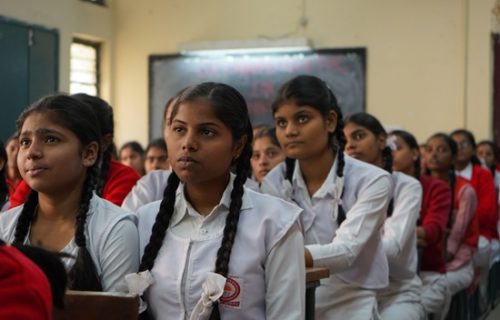
As humanitarian crises disrupt healthcare and protection, UNFPA’s new guidance raises a vital question: are emergency services meeting girls’ needs?
International Day of the Girl Child: New UNFPA guidance puts the focus on whether humanitarian responses connect healthcare with protection from violence
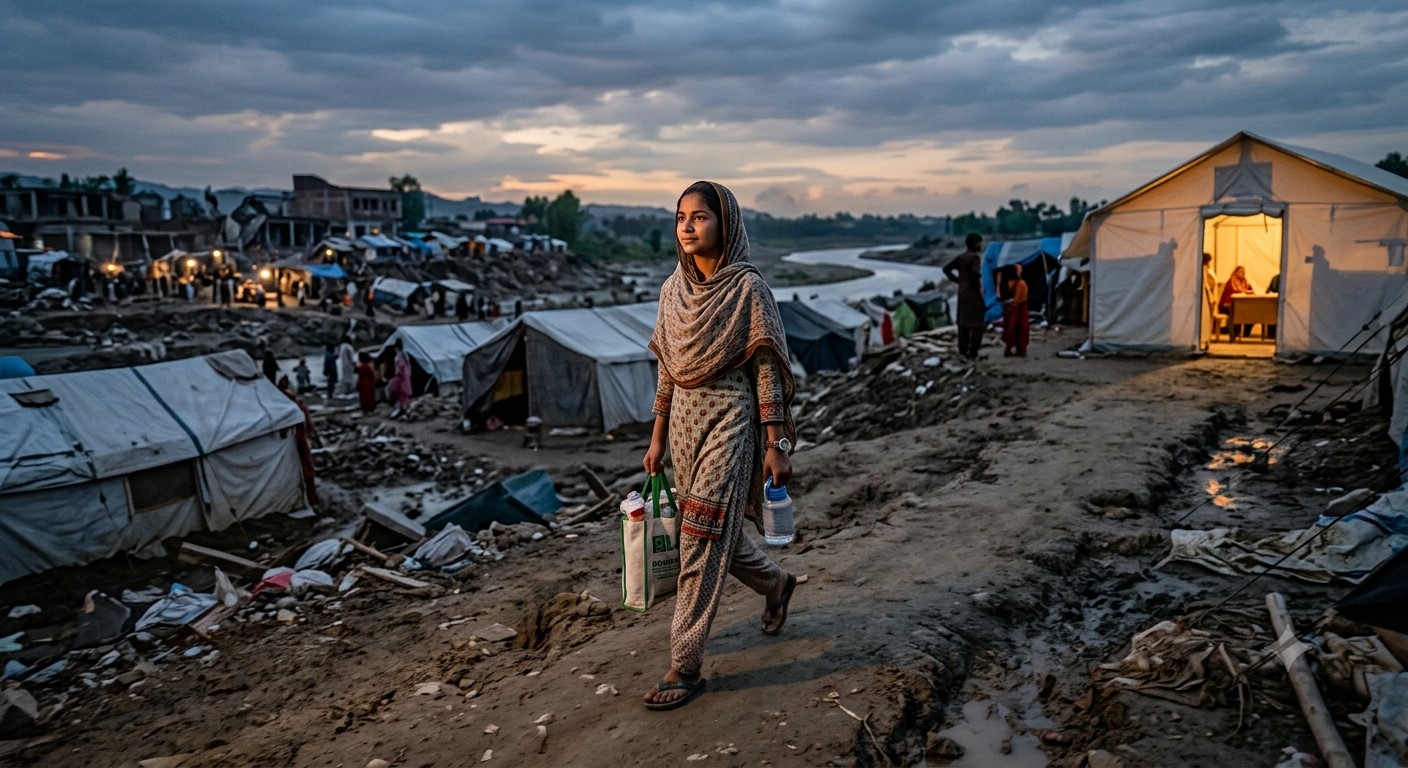
When conflict forces a family from its home, floods destroy a community’s health facilities or a disaster pushes thousands of people into temporary shelters, a girl’s immediate needs extend far beyond food, clean water and a place to sleep.
She may need menstrual hygiene supplies, confidential reproductive healthcare, protection from sexual violence, mental health support or medical attention following abuse. She may also need help returning to school, staying with trusted caregivers and avoiding an early marriage prompted by economic insecurity.
Yet these needs can fall between the responsibilities of different relief agencies, leaving girls to navigate fragmented services at the very moment they have the least control over their circumstances.
This gap raises a critical question on the International Day of the Girl Child, observed on October 11: when humanitarian agencies report that assistance has been delivered, how do they establish whether girls are actually safer and able to access the healthcare they need?
A new guidance note published by the United Nations Population Fund (UNFPA) on October 9, 2026, brings this question into sharper focus. Titled Monitoring SRH-GBV Integration in Emergencies, the 11-page document outlines how humanitarian organisations can assess whether sexual and reproductive health (SRH) services and responses to gender-based violence (GBV) are working together during emergencies.
Rather than treating the existence of healthcare and protection programmes as proof that survivors can access them, the guidance calls for closer monitoring of service availability, referral systems, accessibility, quality, safety and coordination.
Although the framework covers women, girls and other crisis-affected populations, its implications for adolescent girls are particularly significant. For them, a broken referral system, an inaccessible clinic or the absence of a confidential reporting mechanism can mean that a serious health or protection need remains unmet.
The challenge is no longer simply whether humanitarian assistance reaches a crisis zone. It is whether the response protects girls’ health, safety and dignity in practice.
The scale of the crisis behind the numbers
The need for effective protection is evident in the scale of global humanitarian emergencies and the violence girls already face.
According to UNICEF’s Global Annual Results Report 2024: Humanitarian Action, an estimated 183.5 million children required humanitarian assistance in 2024 amid conflict, climate emergencies and natural disasters. Children faced displacement, disrupted education, malnutrition, violence and loss of access to healthcare.
The report also documents the scale of the response: UNICEF said it provided community-based mental health and psychosocial support to 22.3 million children and delivered interventions to prevent gender-based violence and support survivors among 17.7 million children and women in humanitarian settings that year.
These figures demonstrate the reach of humanitarian programmes, but they should not be mistaken for the number of girls protected from violence or the proportion whose healthcare needs were met. The figures cover different groups and services, and they do not independently establish whether girls received coordinated, appropriate care.
That distinction matters because the global burden of violence against children remains enormous.
UNICEF estimates that 650 million girls and women alive today—approximately one in five—experienced sexual violence during childhood. This includes more than 370 million who experienced rape or sexual assault as children.
These are lifetime estimates, not figures for violence during emergencies alone. They nevertheless establish the scale of the underlying problem that humanitarian responses must confront, particularly when displacement and the breakdown of essential services create additional risks.
Emergencies do not affect every child in the same way. Girls may face heightened exposure to sexual exploitation, coercion, early marriage and restrictions on movement. At the same time, disrupted schooling, separation from caregivers and the loss of trusted community networks can weaken the safeguards that might otherwise help identify abuse and connect children with support.
The danger is that the needs of girls become less visible precisely when their vulnerability increases.
How displacement can turn existing inequalities into immediate threats
Displacement changes the conditions under which girls live, learn and seek help. Families may lose their homes and livelihoods, children may be separated from relatives, and familiar health and social services may become inaccessible.
In crowded shelters or temporary settlements, girls may have limited privacy, inadequate sanitation and few safe spaces in which to seek assistance. A girl who experiences violence may not know where to report it, may fear retaliation or may be unable to reach a trained health professional without a parent or other adult accompanying her.
These are risks that emergency planners need to assess rather than assume are present in every crisis.
The consequences can extend beyond immediate physical harm. Interrupted education can reduce access to information and supportive adults. Financial insecurity can intensify pressure on families to arrange early marriages. Inadequate reproductive healthcare can leave adolescent girls without timely, confidential advice or treatment.
UNICEF’s 2026 International Day of the Girl Child campaign identifies child marriage as a central concern. Its estimates indicate that approximately 650 million women and girls alive today were married during childhood, while more than 12 million girls are married before reaching adulthood each year.
The organisation also reports that nearly one in four ever-married or partnered girls aged 15–19 have experienced intimate partner violence during their lifetime.
These statistics describe broader patterns of harm, not the direct impact of humanitarian emergencies. But they show why protection programmes cannot focus exclusively on immediate threats while overlooking the social and economic pressures that can place girls at risk during displacement.
Preventing harm requires more than distributing emergency supplies. It requires maintaining access to education, healthcare, protection services and the people who can help girls exercise their rights.
Why connecting healthcare and violence-response services matters
Sexual and reproductive health services and gender-based violence response programmes frequently address overlapping needs.
A girl who has survived sexual violence may require urgent medical assessment, treatment for injuries, sexual and reproductive healthcare, psychological support and protection from further harm. Depending on her circumstances and wishes, she may also need access to child-protection services, legal assistance or a safe place to stay.
If these services operate in isolation, the responsibility for navigating them can fall on the survivor.
She may be referred to a facility that cannot provide the care she needs, asked to repeat a distressing account to multiple providers or turned away because the appropriate specialist is unavailable. Poorly designed systems can also expose sensitive information or compromise confidentiality.
For adolescents, these barriers can be especially difficult to overcome when services are not designed to account for their age, privacy, safety and need for appropriate consent or assent procedures.
UNFPA’s October guidance addresses the system behind these problems. It recommends using existing indicators, information systems and coordination mechanisms to monitor how sexual and reproductive health and gender-based violence services are integrated during emergencies.
Its proposed monitoring areas include five essential questions:
- Are linked services available? Can affected people access appropriate healthcare and violence-response support within the emergency response?
- Do referrals work? Can a person who needs another service reach it, rather than simply receiving a referral or a telephone number?
- Can people access and use the services? Are practical barriers preventing survivors and other affected people from obtaining care?
- Are services safe and of adequate quality? Do providers protect confidentiality, respect consent and respond appropriately to the needs of those seeking help?
- Are agencies coordinating effectively? Do health and protection teams share appropriate information, identify gaps and adjust their responses together?
The guidance also encourages joint supervision visits and collective reviews of aggregated data, allowing organisations to identify gaps and adapt programmes rather than relying on separate reporting systems.
For girls, the value of this approach lies in shifting attention from the number of facilities, referrals or training sessions reported to whether the wider system is functioning.
A referral is not the same as treatment. A clinic is not necessarily accessible simply because it exists. And a programme cannot be considered successful merely because an activity took place.
The real test is whether the girl who needs assistance can obtain it safely, promptly and without being exposed to further harm.
The missing measure: Can girls actually get help?
Humanitarian agencies routinely work under severe constraints, including damaged infrastructure, shortages of trained personnel, insecurity and limited funding. Monitoring systems must account for these realities without allowing them to obscure unmet needs.
For girls, accessibility is not merely a question of physical distance.
A health facility may be operating but lack trained staff, essential supplies or the ability to provide confidential consultations. A referral pathway may exist on paper but fail because transport is unavailable, a receiving service is overwhelmed or a girl cannot travel safely. A complaint mechanism may be established without being trusted by children or adapted to their needs.
Emergency monitoring therefore needs to examine the entire journey from identifying a need to receiving appropriate care.
That includes asking whether adolescent-friendly services are available, whether information is communicated in languages girls understand, whether facilities have adequate privacy, and whether girls with disabilities or those separated from caregivers face additional barriers.
It also requires examining whether girls know how to seek assistance and whether they can do so without facing stigma, punishment or pressure to remain silent.
These questions should be built into preparedness plans and routine monitoring rather than raised only after a serious failure becomes public.
There is also a crucial distinction between measuring service delivery and measuring outcomes. The number of people trained, consultations conducted or referrals issued can help assess programme activity. Such figures alone cannot demonstrate that girls feel safe, that their confidentiality was protected or that the care they received met their needs.
A credible accountability system must examine both what organisations deliver and what prevents people from benefiting from those services.
Counting survivors must never become another source of harm
Better monitoring is necessary, but collecting information about violence carries its own risks.
Girls may be reluctant to disclose abuse, particularly when perpetrators are family members, caregivers or people on whom they depend. In insecure environments, records containing identifying details can expose survivors to retaliation, stigma or further exploitation if they are mishandled.
The absence of recorded cases must therefore never automatically be interpreted as the absence of violence. Low reporting may reflect barriers to disclosure, inaccessible services or a lack of trust in the institutions responsible for protection.
UNFPA explicitly places safe and ethical data management at the centre of its guidance. Its principles include doing no harm, informed consent or assent, confidentiality and limiting the use of information to its intended purpose.
These safeguards are fundamental when working with children and adolescents.
Monitoring should collect only the information necessary for a legitimate purpose, restrict access to sensitive records and avoid practices that compel survivors to disclose traumatic experiences simply to satisfy reporting requirements. Information should be handled by appropriately trained personnel, with procedures suited to the age and circumstances of those seeking help.
Girls should also be able to express concerns about services without being placed at greater risk.
The objective is not to produce increasingly detailed databases of survivors. It is to generate enough reliable, appropriately protected information to identify service gaps, improve responses and strengthen accountability.
Why the International Day of the Girl Child must include emergencies
The International Day of the Girl Child is an opportunity to recognise girls’ rights, leadership and potential. But the celebration risks becoming superficial if it is disconnected from the conditions in which girls are expected to exercise those rights.
UNICEF’s theme for 2026 calls for an end to child marriage and greater investment in girls’ rights. Its evidence highlights how conflict and displacement can increase risks associated with early marriage, sexual violence and maternal mortality, while girls in fragile and conflict-affected settings face substantial educational disadvantages.
The implications extend beyond conflict zones. Floods, earthquakes, disease outbreaks and other disasters can disrupt healthcare, schooling and child-protection systems. The scale and nature of the risks vary, but preparedness should account for the specific needs of girls before services are disrupted.
That means integrating sexual and reproductive healthcare and gender-based violence response into emergency planning, ensuring that essential services can continue during displacement, training frontline workers and establishing safe referral pathways.
It also means involving girls in decisions that affect them. Consultation must be age-appropriate and safe, with meaningful opportunities for girls to identify barriers that adult planners may overlook.
A programme designed without their participation may fail to recognise practical concerns about privacy, mobility, stigma or the acceptability of services. Listening to girls is therefore not simply a symbolic gesture; it can help make emergency responses more relevant and accessible.
Governments, humanitarian agencies and donors must also ensure that essential health and protection services receive sustained funding. Systems that function only while a particular emergency project is financed are unlikely to provide dependable support through prolonged displacement or repeated disasters.
From promises to measurable accountability
UNFPA’s new guidance offers humanitarian organisations a framework for examining whether integrated services are working. Its impact will depend on how consistently organisations apply the recommendations, act on the findings and make improvements.
Several measures can help translate that framework into meaningful protection for girls.
First, emergency assessments should identify the sexual and reproductive healthcare and violence-response services that are available, the groups unable to access them and the gaps requiring urgent action.
Second, health and protection agencies should establish referral pathways that work in practice, with clear responsibilities and arrangements for safe follow-up. Referrals should not become an administrative exercise that transfers responsibility from one organisation to another.
Third, monitoring should examine service quality and safety alongside coverage. Confidentiality, age-appropriate care, accessibility and survivor-centred treatment must be considered essential components of effective assistance.
Fourth, agencies should review aggregated findings together and use them to adjust programmes. Where services are unavailable, referrals repeatedly fail or particular groups remain excluded, organisations should be able to identify the problem and explain what corrective action is being taken.
Finally, funding decisions should reflect these requirements. Emergency budgets must account not only for immediate relief but also for the trained personnel, supplies, safe facilities and coordination mechanisms needed to sustain health and protection services.
Public reporting should distinguish between activities completed, people reached, services accessed and outcomes demonstrated. It should also acknowledge limitations in the data rather than presenting incomplete information as evidence that needs have been met.
These steps would help turn monitoring from a reporting requirement into a practical instrument for improving girls’ access to care.
The question that should remain after October 11
An emergency response can distribute food, establish shelters and restore essential infrastructure while still leaving girls unable to access confidential healthcare or seek protection from violence.
Recognising that possibility does not diminish the work of humanitarian responders. It makes clear why their efforts need systems that identify failures, protect survivors and ensure that assistance reaches those who need it.
UNFPA’s October guidance offers a way to examine one part of that challenge: whether sexual and reproductive health and gender-based violence services operate as a connected response rather than as separate programmes.
The wider responsibility rests with governments, humanitarian agencies, donors and the institutions charged with protecting children. They must ensure that girls’ needs are considered in emergency preparedness, service delivery, monitoring and recovery.
On the International Day of the Girl Child, the most meaningful measure of commitment is not the number of statements issued in support of girls. It is whether a girl displaced by conflict, affected by a flood or living through another humanitarian emergency can obtain healthcare, seek help safely and retain control over decisions affecting her body and future.
When the next emergency strikes, will the systems meant to protect her be ready—and will anyone be able to demonstrate that they worked?
Sources
- UNFPA, Monitoring SRH-GBV Integration in Emergencies, October 2026.
- UNICEF, International Day of the Girl 2026.
- UNICEF, Sexual Violence: Global Data.
- UNICEF, Global Annual Results Report 2024: Humanitarian Action.