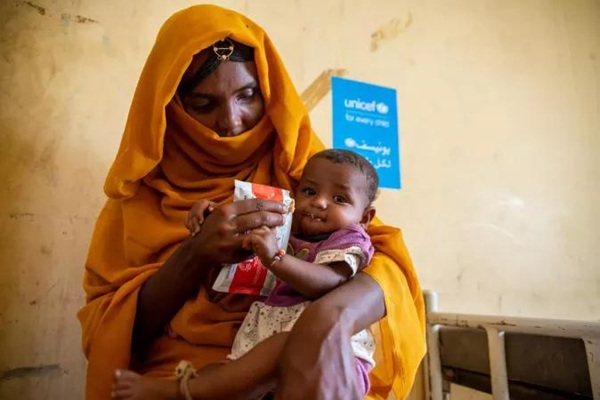
The Global Report on Food Crises 2026 warns that conflict, displacement, poor diets and collapsing essential services are worsening nutrition emergencies, putting mothers and newborns at risk.
Harvinder Kaur
Millions of women entered pregnancy or continued breastfeeding in conditions where their bodies could not obtain the nutrition they needed. In many cases, the problem extended beyond inadequate food supplies to the breakdown of healthcare, clean water, sanitation and humanitarian support.
An estimated 9.2 million pregnant and breastfeeding women were acutely malnourished across 21 countries and territories affected by food crises in 2025, according to the Global Report on Food Crises 2026, released on April 24 by the Global Network Against Food Crises.
The finding highlights a dimension of the global hunger crisis that often receives less attention: the nutritional condition of women during pregnancy and breastfeeding, and the consequences it can have for children from the earliest stages of life.
The report’s findings were also highlighted by the United Nations Children’s Fund (UNICEF), which warned that when women cannot meet their nutritional requirements, their babies face higher risks of low birthweight, illness and death.
The scale of the crisis becomes clearer when the maternal figures are considered alongside the report’s findings on children. An estimated 35.5 million children aged between six months and five years suffered from acute malnutrition across 23 countries and territories in 2025. Nearly 10 million of them were affected by severe acute malnutrition, also known as severe wasting.
Together, the figures point to a crisis affecting mothers and children within the same food-insecure environments, where inadequate nutrition can begin before a child is born and continue through infancy and early childhood.
UNICEF Global+2
Why pregnancy and breastfeeding make the crisis particularly serious
Pregnancy and breastfeeding increase women’s nutritional requirements. Adequate nutrition during these periods supports maternal health, fetal growth, childbirth recovery and infant development.
When women experience acute malnutrition, the consequences can extend beyond their own health. Poor maternal nutrition can increase the likelihood of low birthweight and make newborns more vulnerable to illness and other complications.
The risks do not end with childbirth. Breastfeeding mothers also need sufficient nutrition to maintain their health while caring for their infants.
For women living through conflict, displacement or prolonged food insecurity, meeting these requirements can become extremely difficult. Families may have limited access to nutritious food, functioning health facilities, safe drinking water and basic sanitation.
This makes maternal nutrition more than an issue of individual dietary choices. It is closely connected to household purchasing power, public health infrastructure, humanitarian access and the availability of essential services.
UNICEF Deputy Spokesperson Ricardo Pires highlighted this connection while presenting the findings, warning that the effects of maternal malnutrition can reach babies from the very beginning of their lives.
UNICEF Global+1
Conflict and collapsing services deepen nutrition emergencies
The Global Report on Food Crises identifies conflict and insecurity as major drivers of acute food insecurity and malnutrition.
Gaza, Sudan, Myanmar and South Sudan were among the four contexts facing the most severe nutrition crises in 2025.
The report’s findings underline that hunger cannot always be explained by the availability of food alone. Even where food exists, people may be unable to access it because of insecurity, displacement, damaged infrastructure or restrictions on humanitarian operations.
The simultaneous breakdown of healthcare, nutrition services, clean water and sanitation can further worsen the situation.
In conflict-affected areas, pregnant women may struggle to reach medical facilities for routine antenatal check-ups, nutritional assessments or emergency obstetric care. Displacement can separate families from familiar health services, while shortages of food and safe drinking water increase the difficulties of maintaining maternal and infant health.
UNICEF’s account of the situation in Gaza illustrates how these conditions intersect.
The agency described a rapid deterioration in child nutrition during 2025, with the number of acutely malnourished children more than doubling within a matter of months. Health facilities were overwhelmed, while shortages of therapeutic food, clean water and medical supplies made treatment increasingly difficult.
In Sudan, famine was confirmed in areas where families were trapped, essential services had broken down and children were increasingly cut off from life-saving assistance.
These situations demonstrate how food insecurity, disease and the collapse of basic services can reinforce one another, creating nutrition emergencies that cannot be addressed through food distribution alone.
UNICEF Global+2
266 million people faced acute food insecurity
The maternal malnutrition estimate forms part of a much wider global food crisis.
According to the 2026 report, 266 million people across 47 countries and territories faced high levels of acute food insecurity in 2025. This represented 22.9 per cent of the population analysed.
The figure was nearly double the proportion recorded in 2016, reflecting how food crises have become increasingly persistent in several parts of the world.
Ten countries — Afghanistan, Bangladesh, the Democratic Republic of the Congo, Myanmar, Nigeria, Pakistan, South Sudan, Sudan, Syria and Yemen — accounted for approximately two-thirds of the people facing high levels of acute hunger.
The report also recorded 1.4 million people in six countries and territories experiencing the most severe level of acute food insecurity, classified as Catastrophe under the Integrated Food Security Phase Classification (IPC) system.
Famine was confirmed in parts of the Gaza Strip and Sudan in 2025, marking the first time in the report’s history that two separate contexts experienced confirmed famine in the same year.
The findings show that maternal and child malnutrition is unfolding within a broader environment of widespread food insecurity, where millions of households struggle to obtain enough food to meet their basic needs.
Joint Research Centre+1
Funding cuts threaten the response to maternal and child malnutrition
Another concern raised by the report is the decline in humanitarian and development financing.
Funding for food-crisis responses and food security and nutrition programmes has fallen to levels last seen nearly a decade ago, limiting the capacity of governments and humanitarian organisations to respond to growing needs.
This comes at a time when nutrition interventions require sustained support, particularly in areas affected by prolonged conflict and displacement.
For pregnant women, access to nutritional screening, appropriate food assistance, maternal healthcare and treatment for malnutrition can be critical. For infants and young children, timely identification and treatment of acute malnutrition can make the difference between recovery and life-threatening complications.
UNICEF has also warned that severe wasting in children is a medical emergency. Children affected by the condition have weakened immune systems and face a substantially increased risk of death compared with well-nourished children.
The agency has called for children, pregnant women and breastfeeding mothers to be placed at the centre of interventions linking nutrition with healthcare, water, sanitation and social protection.
The report also highlights a problem that receives comparatively little public attention: the weakening of data collection systems.
Of 65 selected countries and territories, the 2026 report included reliable, technically comparable acute food insecurity estimates for only 47. Funding shortages and restricted access to conflict-affected areas have made it increasingly difficult to collect reliable information.
Without consistent data, identifying populations in urgent need and directing humanitarian resources becomes more challenging.
World Food Programme+2
Maternal nutrition must become part of the hunger response
The estimate of 9.2 million acutely malnourished pregnant and breastfeeding women raises an important question about how global food crises are addressed.
Emergency responses frequently focus on the immediate distribution of food and treatment for severely malnourished children. However, the nutritional needs of women during pregnancy and breastfeeding also require sustained attention.
Maternal nutrition cannot be separated from access to healthcare, safe water, sanitation and economic security. Women who have been displaced or are living in conflict-affected communities need more than emergency food supplies. They also need functioning health services, appropriate nutritional support and reliable access to essential resources.
The Global Report on Food Crises 2026 warns that the outlook remains deeply concerning, with continuing conflict, climate shocks and economic disruptions threatening to worsen food and nutrition insecurity.
For millions of women, the crisis is already affecting their health during some of the most demanding stages of their lives. For their children, the consequences may begin even before birth.
The 9.2 million estimate is therefore not just another indicator of global hunger. It is a warning about the link between women’s nutrition, maternal health and the conditions in which the next generation begins life.