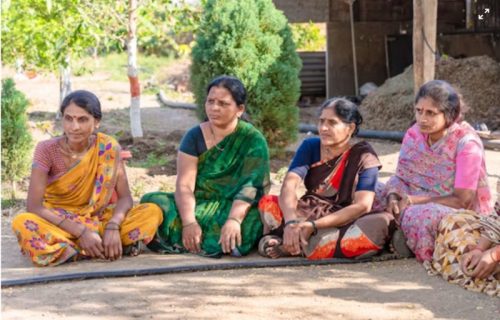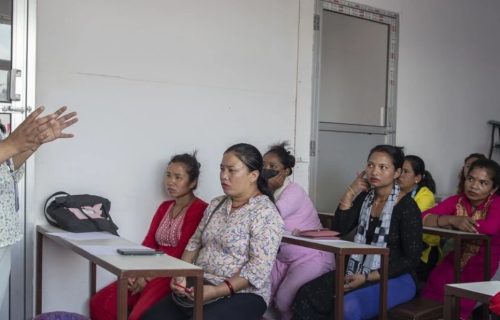
The National Human Rights Commission has called for safer public transport, stronger police responses, functional workplace harassment committees and better support for survivors of violence against women.
The National Human Rights Commission (NHRC) has asked the Centre, state governments and Union Territory administrations to strengthen measures to protect women at workplaces and in public spaces, seeking reports on the implementation of its recommendations within two months.
The commission has issued an advisory titled Women’s Safety at Work and Public Spaces to the secretaries of 10 Union ministries, the chairperson of the Railway Board and the chief secretaries and administrators of all states and Union Territories.
The recommendations cover eight broad areas, including awareness about sexual harassment, public infrastructure, intervention by bystanders, police response, support for survivors, cybercrime against women and long-term institutional reforms.
The advisory comes amid continuing concerns about crimes against women despite existing legal safeguards. According to the NHRC, women’s labour force participation stood at 34.6% in September 2026, while approximately 4.4 lakh crimes against women were recorded in the latest National Crime Records Bureau report published in 2026.
The commission has stressed that safety at workplaces and in public spaces is essential to ensuring women’s dignity, equality and meaningful participation in economic and social life.
Safer streets and public transport
The NHRC has called for improvements to the infrastructure women rely on while travelling, working and accessing public services.
Recommendations reported by United News of India include adequate street lighting and functional closed-circuit television cameras in areas such as subways, parking lots, ATMs, bus stands, railway stations and metro stations.
The commission has also called for emergency alarm buttons in buses and trains, clear display of vehicle registration and driver details, and accessible public facilities for women with disabilities.
Safety provisions must also extend to women working night shifts. The advisory calls for safe transport arrangements, including transport home, and proper verification of drivers and security personnel by employers.
Other measures include clean feeding rooms and functional sanitary-pad dispensers in appropriate public facilities.
The recommendations address the practical conditions that can affect women’s ability to travel, work late, use public transport and access public spaces without fear of harassment or violence.
Police response and survivor support under scrutiny
The NHRC has called for more sensitive handling of complaints by police personnel, including measures to prevent victim-blaming and ensure that survivors are treated with dignity.
It has recommended gender-sensitisation training for police personnel across ranks, time-bound responses to emergency calls, regular patrolling of deserted areas and identified crime hotspots, and standard operating procedures for handling complaints.
The commission has also called for functional women’s help desks in police stations across the country.
According to the figures cited in the UNI report, 14,658 of India’s 16,469 police stations had women’s help desks as of December 2025. The NHRC has sought functional desks in the remaining stations, along with regular inspections and checks of emergency helplines, including 112 and 1091.
For survivors of sexual violence, the advisory stresses timely medical examinations, psychosocial support and better coordination between police, hospitals and other support services.
It also calls for the discontinuation of the two-finger test in sexual violence cases, a practice the Supreme Court has prohibited, and for ethical media reporting guidelines to protect survivors’ identities and prevent unauthorised disclosure of investigation details.
Workplace harassment committees must function effectively
The advisory places particular emphasis on implementing the Sexual Harassment of Women at Workplace (Prevention, Prohibition and Redressal) Act, 2013, commonly known as the POSH Act.
The law provides a framework for addressing sexual harassment at work, including through Internal Committees in workplaces where required and Local Committees at the district level for cases covered by the legislation.
The NHRC has called for these committees to function effectively, regular awareness programmes for employees and the submission of enquiry reports to District Officers where required.
The recommendations highlight the need to move beyond the existence of workplace policies on paper. Employees must know how to report harassment, understand the available procedures and be able to access functioning complaint mechanisms.
Employers also have responsibilities concerning workplace safety, including appropriate arrangements for women working night shifts.
Action against cybercrime and online abuse
The commission has called for stronger measures to address technology-facilitated abuse, including deepfakes, doxxing, revenge pornography and the non-consensual sharing of explicit content.
It has recommended awareness programmes, gender-sensitive reviews of cyber laws and specialised training for law enforcement agencies dealing with such offences.
The recommendations recognise that threats to women’s safety are not confined to physical spaces. Online harassment and the circulation of intimate material without consent can expose women to intimidation, reputational harm and further abuse.
The NHRC has also emphasised prevention through awareness programmes on consent, gender equality and respectful conduct in schools, colleges and universities. Educational institutions have been encouraged to promote self-defence training for girls and women.
Bystander intervention and long-term reforms
Another area of the advisory concerns the role of people who witness harassment or violence.
The NHRC has proposed considering legislation, drawing on the principles of the Good Samaritan framework, to encourage people to intervene safely when crimes against women occur. It has suggested that the Ministry of Women and Child Development could develop standardised protocols to guide such interventions.
The commission has also called for real-time data on violence against women, disaggregated by gender, periodic audits of existing facilities and mandatory gender audits for major new infrastructure projects.
States and Union Territories have been urged to ensure timely and efficient utilisation of the Nirbhaya Fund, which supports initiatives related to women’s safety.
The recommendations seek a coordinated approach involving government departments, police, employers, educational institutions and media organisations.
Two-month deadline puts implementation in focus
The NHRC has asked all concerned authorities to submit Action Taken Reports within two months, informing the commission of progress in implementing the recommendations.
The advisory has been circulated to the ministries of Women and Child Development, Education, Home Affairs, Information and Broadcasting, Labour and Employment, Corporate Affairs, Road Transport and Highways, Housing and Urban Affairs, and Health and Family Welfare, in addition to the Railway Board and state and Union Territory administrations.
The deadline provides a mechanism for the commission to seek updates from the authorities concerned. The advisory itself, however, does not establish that the recommended measures have already been implemented.
The next step will be to assess what action governments and institutions take, including whether complaint mechanisms function effectively, public infrastructure improves and women can access support without facing further barriers.
For working women, the impact of these measures will ultimately depend on implementation. A safe workplace requires more than a written policy, just as a safe journey requires more than the presence of a CCTV camera. Effective complaint procedures, responsive policing, accessible transport and reliable survivor support all have a role to play in making women’s safety a practical reality.
Source: National Human Rights Commission, India; United News of India, October 27, 2026.