Maharashtra’s new law recognising women as farmers, regardless of land ownership, has drawn an overwhelming response from women working in agriculture. But the early figures also raise questions about how quickly this recognition is translating into official documentation and whether it will improve women’s access to government support.
More than 35 lakh applications for Women Farmer Certificates had been received by October 2026, according to a report published by The Indian Express on October 8. Approximately 58,700 certificates had been issued through 750 gram sabhas, the report said.
The certificates are being issued under the Maharashtra Women Farmers Empowerment Act, 2026, which seeks to recognise women engaged in farming and allied activities even when agricultural land is not registered in their names.
The difference between the number of applications and certificates issued highlights the scale of the task facing the state as it attempts to bring women who have long worked in agriculture into the formal system of farmer recognition.
Why women working on farms are often not recognised as farmers
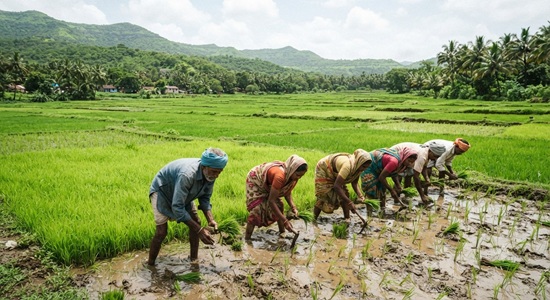
Across rural India, women participate in sowing, weeding, harvesting, livestock rearing and other agricultural activities. Yet their work does not always translate into official recognition as farmers.
Land records are frequently held in men’s names. When access to agricultural benefits depends on land ownership or documentation linked to it, women who cultivate family land, work as agricultural labourers or contribute to allied activities may struggle to access the same support.
This can affect their ability to seek institutional credit, obtain agricultural services and benefit from schemes designed for farmers. It can also leave their contribution to household income and food production less visible in official records.
Maharashtra’s law attempts to address this gap by recognising women’s agricultural work rather than making land ownership the sole basis of their identity as farmers.
The eligibility framework covers a range of activities, including crop cultivation and allied work such as dairy farming, animal husbandry, poultry, fisheries, beekeeping and horticulture. It also provides a route for women involved in agricultural labour and other forms of farm work to seek recognition.
A new identity, but what will it change?
For women who have worked in agriculture for decades without being formally recognised as farmers, the certificate can represent an important change in status.
The Indian Express report featured Vaijayanta Jadhav, a woman from Maharashtra’s Satara district who said she had spent around 30 years working on other people’s farms before receiving her certificate.
Her experience illustrates the distinction between performing agricultural work and being officially recognised for it.
However, the certificate’s long-term value will depend on what women can access after receiving it. Recognition alone does not guarantee that credit will be approved, subsidies will be granted or agricultural services will become easier to obtain.
Government departments and financial institutions must also recognise the certificate and establish clear procedures for using it. Women need to know which benefits they can claim, what additional documents may be required and where they can seek assistance if applications are rejected or delayed.
The law’s practical impact will therefore depend not only on how many certificates are issued, but also on whether they help women exercise greater control over agricultural resources and income.
The implementation challenge
The early application figures suggest substantial demand for formal recognition. Yet the number of applications received and the number of certificates issued measure different stages of the process.
Applications may require document checks, local verification and approval through gram sabhas. The available figures do not, by themselves, establish why the gap has emerged or how many applications are awaiting verification, incomplete or otherwise pending.
That distinction matters. Without a detailed breakdown of application status, it would be premature to conclude that the system is failing or that all unissued certificates represent delays.
The government could make the process easier to assess by publishing regular district-wise figures on applications received, applications verified, certificates approved and applications pending. Information on rejection rates, reasons for rejection and average processing times would also help applicants understand the system.
Access is another important consideration. Women who work as agricultural labourers or cultivate land without formal ownership may have difficulty obtaining or uploading documents. Local assistance, clear eligibility guidance and accessible grievance mechanisms could help ensure that the scheme reaches women who are least connected to formal institutions.
The reported involvement of gram sabhas in verification makes the local implementation process particularly important. Women need clear information about where and when applications can be submitted, how their work will be verified and what they can do if their applications remain unresolved.
Why the policy matters beyond Maharashtra
The legislation addresses a wider question for agricultural policy: should a person’s recognition as a farmer depend primarily on owning land, or should it also reflect the work they perform?
Women contribute across farming and allied activities, but land ownership remains an important gateway to many forms of institutional support. A system that recognises agricultural work more broadly could help make public services more responsive to women who have been excluded by conventional definitions of a farmer.
Maharashtra’s approach could offer lessons for other states, but its effectiveness will depend on implementation. The number of women receiving certificates is one measure of progress; whether those certificates lead to greater access to credit, government schemes, training and markets is another.
The state will also need to assess whether the benefits reach women across different forms of agricultural work, including landless labourers, tenant cultivators and women engaged in livestock and other allied activities.
What should be tracked next?
The next stage is to establish whether the scheme is moving from recognition on paper to tangible benefits.
Several questions remain important: How many of the applications received have been verified? How long does the process take? Are women without land titles able to obtain certificates without unnecessary administrative hurdles? And are certificate holders subsequently accessing schemes, institutional credit and agricultural services?
Publishing these outcomes would help distinguish administrative progress from the wider social and economic impact the law seeks to achieve.
For women who have spent years working in fields without being identified as farmers, formal recognition is a meaningful first step. The real test is whether that recognition gives them a stronger claim to the resources, opportunities and decisions that shape their livelihoods.