Assam student Himashree Boro reportedly sent distress messages during a train journey before being found dead in Andhra Pradesh. Her family alleges foul play as investigators examine the evidence.
A 20-year-old college student travelling home alone after a dance programme reportedly told her family and friends that she was frightened by the men around her inside a train coach. Hours later, she became unreachable. Her belongings were found aboard the train, but she was missing. Her body was subsequently recovered beside railway tracks in Andhra Pradesh.
The death of Himashree Boro, a student of B Borooah College in Guwahati, has raised troubling questions about what happened during her final journey, whether attempts to seek help were acted upon and how she came to be separated from her belongings.
Boro, from Assam’s Kamrup district, was returning from Visakhapatnam after participating in dance programmes with a troupe. Her family suspects foul play and has demanded a thorough investigation. Railway authorities have indicated that she may have fallen from a moving train, but the circumstances of her death remain unconfirmed.
‘A lot of men around me’: Her reported final messages
According to accounts provided by her family and reported by multiple news organisations, Boro contacted people close to her during the journey, expressing discomfort and fear about the atmosphere inside the coach.
In a message reported by the media, she said there were “a lot of men around me”.
Her family said she was uncomfortable with the behaviour of some passengers, who were reportedly behaving unruly and may have been under the influence of alcohol. She also reportedly shared a video showing the inside of the crowded compartment with a friend.
According to a report by The News Minute, Boro made a distress call to a friend between approximately 2.30 am and 2.40 am on October 6, saying that some men were bullying and misbehaving with her. Her friend reportedly contacted railway police and other helplines seeking assistance.
Boro’s phone subsequently became unreachable.
The reported messages have become a central part of the questions surrounding her death. However, the complete communications, the precise sequence of calls and the response by railway personnel need to be established through the investigation.
She was returning home for an examination
Boro had travelled to Visakhapatnam with a group from Assam for dance performances. She was returning to Guwahati ahead of the others because she had an examination scheduled for October 10, according to media reports.
She boarded the Kanyakumari-Dibrugarh Vivek Express, Train No. 22503, at Visakhapatnam during the early hours of October 6.
According to The Times of India, police said she had purchased a general ticket and was travelling in a sleeper coach without a confirmed berth. The coach was reportedly crowded.
This detail is relevant to understanding her travel circumstances, although it does not establish what caused her death.
Railway personnel later found her bags and identification documents in the train’s S2 coach. Boro herself could not be located.
Her body was subsequently recovered near railway tracks in Srikakulam district, Andhra Pradesh. Reports placed the recovery site in the vicinity of Tekkali and the Dusi-Ponduru section.
The discovery transformed a missing-person search into an investigation into a suspicious death.
CCTV footage brings another question into focus
Investigators are examining CCTV footage from Visakhapatnam railway station, along with video recordings, call records and other evidence.
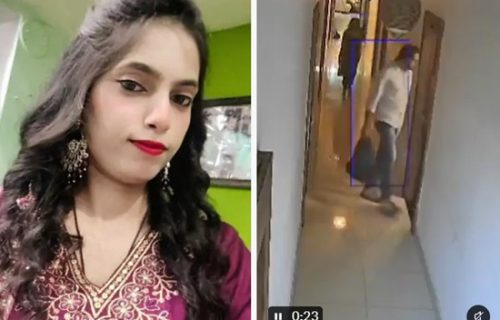
According to reports by India Today and other media outlets, footage from the station shows an unidentified man approaching Boro on the platform shortly before she boarded the train. The footage reportedly captures an interaction between them, but it does not establish the man’s identity, his intentions or whether he had any connection to her subsequent disappearance.
Investigators are also examining the video she reportedly shared from inside the coach and the movements of passengers travelling in or around the compartment.
These are leads to be verified, not evidence that any particular person committed a crime.
The investigation must establish when and where Boro was last seen, what happened after her final communications and how she came to be separated from her luggage.
Family alleges foul play and questions the response to distress calls
Boro’s family has alleged that she may have been murdered and questioned whether the authorities did enough to locate her after concerns about her safety were raised.
According to The Indian Express, the family alleged that her friend contacted railway police and other helplines after receiving her distress messages. The family has sought accountability and a thorough inquiry into the response to those calls.
The railway authorities have said a preliminary inquiry suggested that Boro might have fallen from the moving train. The Government Railway Police (GRP) in Palasa and the Railway Protection Force (RPF) in Srikakulam have registered separate cases in connection with the incident, according to The Indian Express.
The exact circumstances and cause of death have not been conclusively established. The post-mortem findings and forensic evidence are expected to help investigators determine what happened.
The key questions remain: Was Boro’s reported distress communicated to the appropriate personnel? What action followed? Could she have been located before the search ended in tragedy? And what evidence can establish how she came to be beside the tracks?
These questions require answers based on records, witness statements and forensic findings rather than assumptions.
Questions also surround the dance assignment
The circumstances of Boro’s trip to Andhra Pradesh have also drawn scrutiny from her relatives.
According to The News Minute, family members said she had travelled with a group of eight people for an assignment involving dance performances over a period of about two months. Relatives reportedly raised concerns about payments for performances that they said were still pending and expressed questions about the arrangements made for the troupe.
A dispute over payments between the dance troupe and programme organisers was also reported by The Indian Express, citing an MLA who spoke to the newspaper.
These reported concerns form part of the wider context of her trip. They do not, on their own, establish a connection between the dance assignment and her death.
Investigators would need to verify the arrangements, interview the people involved and determine whether any information is relevant to the events surrounding her disappearance.
Students demand answers
The case has also prompted concern among students in Guwahati. Students of B Borooah College reportedly staged a protest on October 8, demanding a thorough investigation into Boro’s death and accountability from the police and railway authorities.
Their demands reflect the questions troubling her family and those following the case: how a young woman who reportedly sought help during a train journey came to be found dead, and whether the circumstances could have been different.
For Boro’s family, establishing the facts is essential. For railway authorities, the investigation also presents an opportunity to clarify how missing-passenger reports and distress complaints are handled across jurisdictions.
When a request for help must lead to action
Boro’s death raises a wider question about women’s safety on public transport: what happens after a woman says she is afraid?
Emergency helplines, security personnel and complaint mechanisms are important, but their effectiveness depends on whether a report is received, assessed, communicated to the relevant teams and followed through.
When a passenger becomes unreachable after reporting that she feels unsafe, the response may require coordination between railway security, the Government Railway Police, local police and personnel along the train’s route. The exact procedures and actions taken in Boro’s case need to be established rather than presumed.
The case also illustrates why investigations into deaths involving women must examine the full sequence of events. A preliminary explanation should not replace a thorough inquiry into the available evidence, particularly when relatives have raised specific concerns about prior distress calls.
Boro’s reported messages provide a reason to investigate urgently. They do not, by themselves, establish how she died or who, if anyone, was responsible.
The investigation must now establish what happened during her final journey, whether any failures occurred in responding to requests for assistance and whether anyone should be held accountable.
Until those facts are established, the most important questions remain unanswered.