Nepal’s 2026 floods show why women and girls can be overlooked in disaster response, from reproductive healthcare and menstrual hygiene to safety, privacy and gender-based violence.
When disaster strikes, the first numbers that emerge are usually the ones that define the scale of destruction: people killed, people missing, homes washed away, roads destroyed and communities displaced.
But some of the most consequential numbers can take longer to appear.
How many pregnant women have been displaced? How many women have lost access to contraception? How many adolescent girls are menstruating in shelters without privacy or clean water? How many new mothers are recovering from childbirth while sleeping on a floor? How many women are at heightened risk of gender-based violence because homes, toilets and community protection systems have disappeared?
In Nepal, the devastating floods of August 2026 have brought these questions sharply into focus.
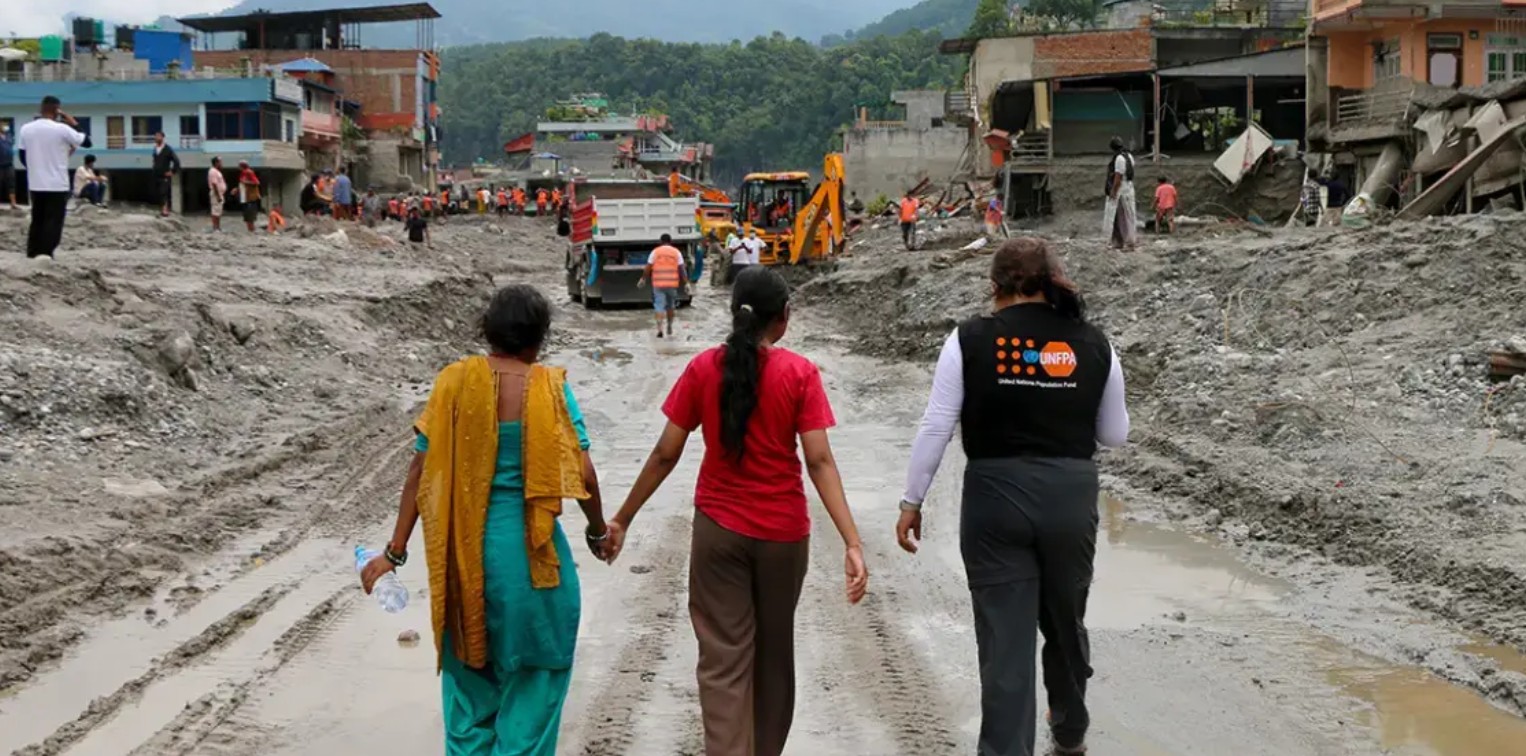
More than a month after the August 26 flash floods, approximately 352,000 people had been affected, according to the latest United Nations Population Fund (UNFPA) situation report. Among them were an estimated 98,560 women of reproductive age. The reported death toll stood at 1,453, while 5,285 people remained unaccounted for.
Those figures are critical. But they tell only part of the story.
Because for women and girls, surviving the flood is not the end of the emergency.
The woman who left for a vaccination appointment
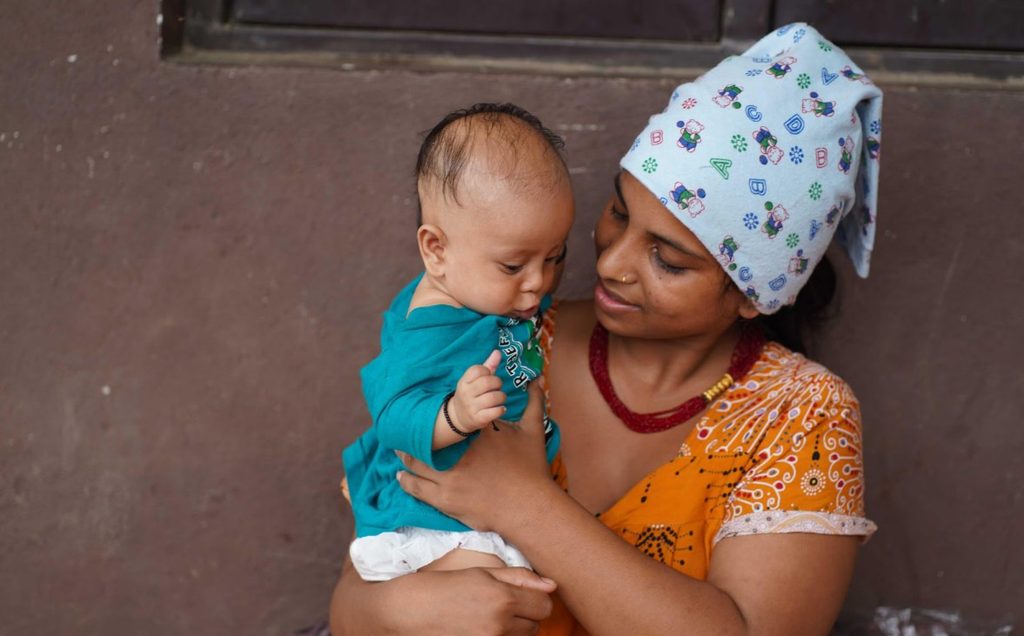
On the morning of August 16, Puja Pariyar left home with her three-month-old daughter to take the baby for a routine vaccination.
Before she could return, the flood arrived.
Her mother called and told her not to come back because the water was rising. The telephone connection was cut. Puja did not know whether her family was safe. She eventually fled with her baby and spent three days in a displacement centre before being evacuated by helicopter.
Puja had recently given birth. Her postpartum stitches had torn and she was still experiencing pain that made sitting and walking difficult.
Yet the disaster did not give her body time to recover.
In the shelter, she struggled to obtain adequate nutrition. Her ability to breastfeed was affected. The loss of her usual support system, uncertainty about her family and the conditions inside the shelter contributed to anxiety and severe emotional distress.
The flood had not merely displaced a woman.
It had interrupted postpartum recovery, infant care, nutrition, breastfeeding and mental health at the same time.
UNFPA’s account of Puja is a reminder of something that emergency statistics can easily obscure: a woman does not stop being pregnant, postpartum, menstruating or responsible for a newborn simply because a disaster has occurred.
Nearly 100,000 women of reproductive age were affected
The numbers make the issue harder to dismiss.
UNFPA estimates that 98,560 women of reproductive age were affected by the Nepal floods, including approximately 5,030 pregnant women. Earlier in September, UNFPA estimated that around 750 of those pregnant women could require emergency obstetric care over the following three months.
That means the emergency response is not dealing with a single moment of danger.
Pregnancies continue. Babies continue to be born. Women continue to need antenatal and postnatal care. Menstruation continues. Contraception remains necessary. Survivors of sexual violence may still need medical and psychological care.
And when roads disappear, health facilities are damaged and transport becomes unreliable, accessing those services can become considerably harder.
UNFPA says damage to health facilities, impassable roads and disrupted transport have severely constrained maternal health services in the affected districts.
The organisation’s latest report says that between September 10 and 30, UNFPA and its partners reached 2,722 people across seven municipalities with sexual and reproductive health services and gender-based violence prevention and response services.
That work matters.
But the gap between those who need assistance and those who can actually be reached is precisely why reproductive health cannot be treated as an optional component of disaster response.
‘There were five girls in our group’
For adolescent girls, the problem can become even less visible.
UNFPA’s September 3 account of Samikshya, a 24-year-old woman displaced by the floods in Nuwakot, describes what happened when five girls in her group began menstruating around the same time.
There was no private space, clean water or spare clothing.
Food, cooking utensils and water tanks were arriving as relief supplies, but menstrual products and clothes were not initially available. The girls eventually received help from a neighbour who went out to find sanitary pads and clothing.
Samikshya was also sharing a single public toilet with dozens of people.
These details may sound small compared with collapsed roads or destroyed houses.
They are not.
For a girl or woman living in a crowded emergency shelter, the absence of a functioning toilet, menstrual products, clean underwear, bathing facilities or privacy can determine whether she can safely manage her most basic bodily needs.
It can also determine whether she feels safe enough to leave the shelter, seek healthcare or report violence.
UNFPA has specifically warned that overcrowding, displacement and the breakdown of community protection systems can increase risks of gender-based violence, sexual exploitation and trafficking, particularly for women and adolescent girls.
The problem begins with what gets measured
This is where the phrase “counted last” becomes more than a metaphor.
In an emergency, some needs are easier to count.
Deaths can be counted.
Missing people can be counted.
Buildings can be assessed.
Roads can be measured.
But the need for privacy, menstrual hygiene, psychological support, contraception, protection from sexual violence or safe postnatal recovery is much less visible in the first wave of disaster reporting.
UNFPA itself has highlighted that adolescent girls tend to be counted late in an emergency.
That delay matters because what is not identified early is less likely to be built into the first response.
A relief system designed around the “average displaced person” can unintentionally become a system designed around needs that are easiest to see and distribute.
Food packets are visible.
A damaged bridge is visible.
A tent is visible.
A sanitary pad requirement for thousands of women and girls is not.
Neither is the need for emergency obstetric care three weeks from now.
Neither is the psychological distress of a woman who has lost her family.
Neither is the heightened risk of violence in an overcrowded shelter without privacy.
Reproductive healthcare does not become less essential during a disaster
There is another risk: once healthcare systems are disrupted, sexual and reproductive health services can quietly fall down the priority list.
Nepal’s experience during previous emergencies offers a warning.
A recent report in The Rising Nepal, citing reproductive-health advocates, noted concerns that flooding and damage to transport and health facilities could disrupt access to contraception and safe abortion services in affected areas. Advocates stressed that disaster response needs to maintain supplies of contraceptives and other reproductive-health commodities rather than treating them as secondary services.
This is particularly important in remote areas where women may already travel significant distances to reach health facilities.
A closed health post does not simply mean one less building.
For a pregnant woman, it can mean a longer journey to antenatal care.
For a woman seeking contraception, it can mean an unintended interruption.
For someone experiencing complications after childbirth, it can mean a dangerous delay.
For a survivor of sexual violence, it can mean losing access to urgent medical and psychosocial care.
The disaster therefore compounds existing inequalities.
Women are not only victims of disasters
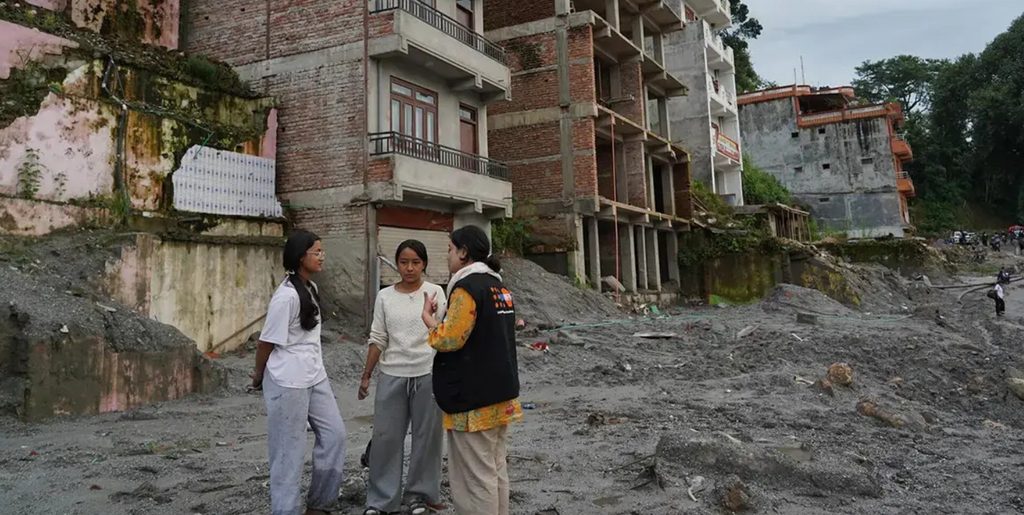
There is another side of the story that often disappears from emergency reporting: women are also among the people keeping communities functioning.
UNFPA’s accounts from Nepal include women caring for children, grieving relatives, helping other displaced families and trying to maintain basic household life amid devastation.
Ishwori, 53, described the loss of her home not simply as the destruction of a building but as the loss of security.
Ram Maya, 20, who lost her mother and sister-in-law, found a way to cope by cooking for displaced families and caring for children who had lost their parents.
These are not simply stories of female vulnerability.
They are stories of women performing unpaid care work during an emergency while simultaneously dealing with their own losses.
That distinction matters.
If disaster planning sees women only as beneficiaries, it can miss their role as caregivers, community organisers, informal workers and decision-makers.
And if it sees households as a single unit, it can miss inequalities within those households.
A family may receive food.
But who eats first?
A shelter may have a toilet.
But is it private and safe for adolescent girls?
A health centre may reopen.
But can a woman reach it?
A relief camp may have a registration list.
But are women-headed households properly identified?
These are questions of who gets counted, and how.
The lesson is bigger than Nepal
Nepal’s floods are a particularly clear example because the needs are being documented while the emergency response is still unfolding.
But the problem is global.
UN Women has repeatedly argued that sex- and age-disaggregated data are essential for understanding how disasters affect different groups. Without such data, differences in losses, risks and access to assistance can remain hidden.
Recent humanitarian experience in Gaza offers another illustration.
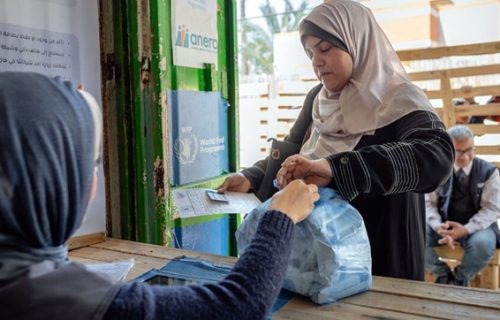
UN Women reported that gender-specific data helped humanitarian partners identify women-headed households that were being missed by food distribution systems. At one point, assistance was reaching only around one-fifth of recipients, primarily men who were able to queue for it. Gender data helped prioritise 14,716 women-headed households for food assistance.
The lesson is straightforward:
Data is not neutral if the people being counted are not visible.
A relief operation can be technically efficient and still fail women.
A distribution centre can serve thousands of people and still leave women-headed households without assistance.
A disaster database can contain thousands of names and still fail to record reproductive health needs.
A shelter can be full and still not be safe.
Counting women separately is therefore not about producing another statistic for a report.
It can change where assistance goes.
What should a gender-responsive disaster response look like?
The answer is not to create a separate relief system for women.
It is to make the main system capable of seeing women’s needs from the beginning.
That means collecting sex- and age-disaggregated information from the earliest assessments.
It means identifying pregnant women and women who have recently given birth.
It means ensuring emergency obstetric and newborn care remains available even when roads and facilities are damaged.
It means pre-positioning contraception, menstrual products, dignity kits and essential maternal-health supplies.
It means ensuring toilets and bathing facilities provide privacy and safety.
It means establishing mechanisms for reporting and responding to gender-based violence.
It means making adolescent girls visible in emergency assessments rather than treating their needs as an afterthought.
And it means including women in decisions about shelters, relief distribution, health services and recovery.
UNFPA’s humanitarian approach already emphasises the need to incorporate women and adolescent girls into disaster preparedness and response, including sexual and reproductive healthcare and gender-based violence services.
The challenge is turning that principle into standard practice everywhere.
From surviving the flood to surviving its aftermath
Nepal’s immediate flood emergency may eventually disappear from the headlines.
Roads will be rebuilt.
Homes will be reconstructed.
Businesses will reopen.
The death toll will stop rising.
But recovery for many women will take much longer.
For Puja, recovery means healing from childbirth while caring for a newborn after losing access to food, privacy and familiar support.
For Samikshya and the girls in her group, it meant managing menstruation without basic supplies.
For women in overcrowded shelters, recovery also means living with questions about safety, dignity and the possibility of violence.
And for pregnant women in isolated communities, recovery means knowing whether they can reach a health facility when labour begins.
The most important question after a disaster is therefore not simply how many people survived.
It is also:
What does survival look like for different people?
If women and girls are counted only after the food is distributed, the roads are assessed and the immediate rescue operation is over, the response has already missed part of the emergency.
The Nepal floods show why gender-responsive disaster planning cannot begin after women start asking for help.
It has to begin when the first warning is issued.
Because when a river rises, a woman does not stop menstruating.
A pregnancy does not pause.
A newborn does not wait.
A survivor does not stop needing protection.
And a girl does not become less visible simply because her community is facing a larger disaster.
The real test of emergency response is not only how quickly we count the dead. It is how quickly we recognise the living — especially those whose needs are easiest to overlook.
Zenana Takeaway
The Nepal floods offer a larger lesson for disaster policy across South Asia and beyond: women’s needs cannot be treated as a secondary humanitarian category.
The first hours of a disaster determine who is visible in the response. If women and girls are missing from the first assessment, they can remain missing from relief planning, healthcare provision and recovery priorities.
Counting them early is not bureaucracy.
It is part of saving lives.
Sources
- UNFPA: Situation Report on the Floods in Nepal, 10–30 September 2026
- UNFPA Nepal: A Newborn, a Flood, and the Long Journey Back to Safety
- UNFPA Nepal: Stories of Survival After the Nepal Floods
- UNFPA Nepal: Two Minutes
- UNFPA: Humanitarian Development Nexus
- UN Women: Gender Data in Gaza Are Helping the Humanitarian Response Reach Women and Girls
- UN Women: Gender Data and Disaster Risk Reduction
- The Rising Nepal: Floods Threaten Access to Contraception in Rasuwa