India’s experiment with women-led community justice has reported resolving hundreds of cases in its initial pilot regions, but a parliamentary committee has flagged inadequate implementation, under-utilisation of funds and gaps in professional support for women seeking help.
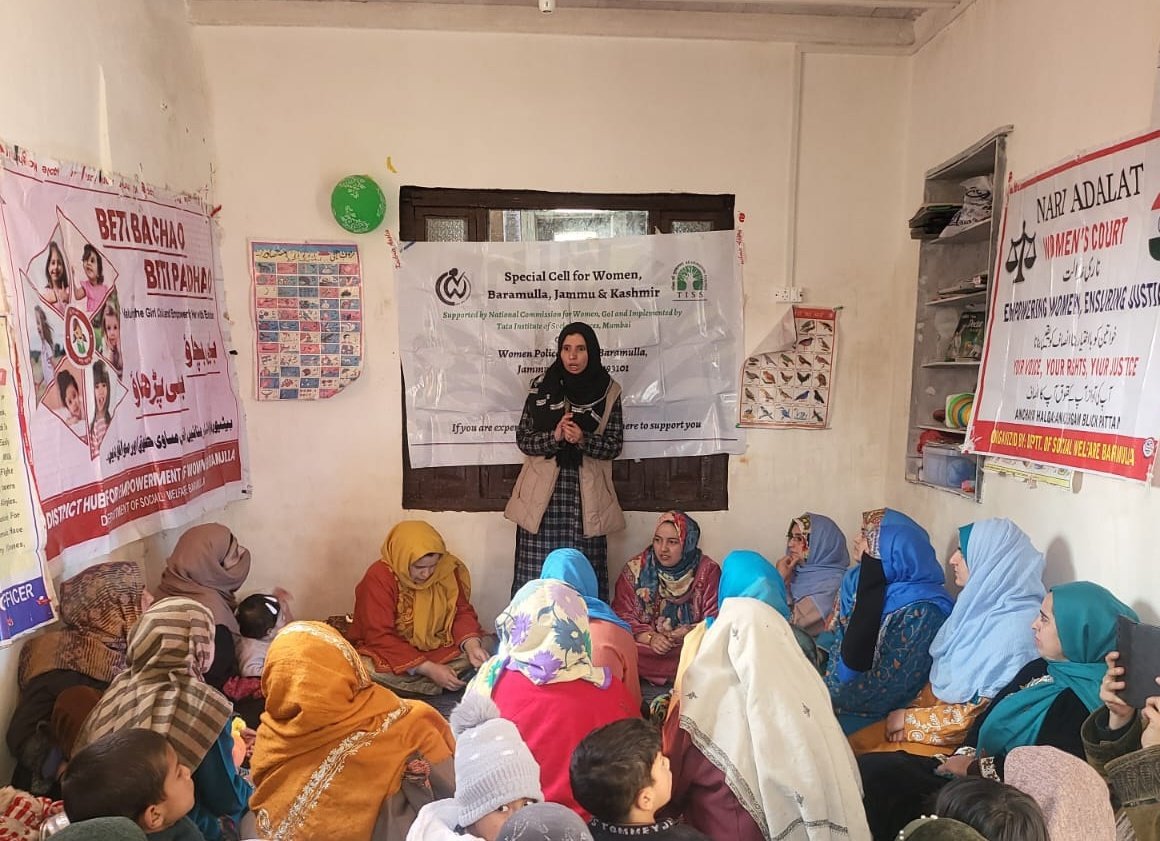
Nari Adalats were introduced under the Union government’s Mission Shakti programme to give women an accessible, community-level mechanism for addressing grievances involving harassment and the curtailment of their rights and entitlements.
The initiative promises a local alternative for women who may struggle to navigate formal institutions. Yet the scale of implementation and the quality of outcomes remain important questions as the government seeks to expand the programme.
A report of the Department-related Parliamentary Standing Committee on Education, Women, Children, Youth and Sports, presented in June 2026, criticised the scale and pace of implementation and called for a comprehensive review of the pilot, clear timelines for expansion and stronger counselling and psychological support services.
The committee’s observations raise a fundamental question: can a community justice programme fulfil its promise of accessible support for women without adequate implementation, professional assistance and transparent monitoring?
Hundreds of cases reported resolved in two pilot regions
The government launched Nari Adalats in 2023 under the Sambal component of Mission Shakti, initially selecting Assam and Jammu and Kashmir for implementation.
According to NITI Aayog’s India Voluntary National Review 2025, 77 of 102 cases in Assam and 337 of 395 cases in Jammu and Kashmir had been resolved through the process by the end of 2024.
Together, the two regions reported 414 cases resolved out of 497 registered, or approximately 83 per cent.
These figures indicate that the forums have handled and closed a substantial proportion of the cases reported to them. They do not, however, establish whether settlements were sustained, whether complainants felt safe or whether women obtained lasting relief.
The distinction matters because case disposal is not necessarily the same as justice. A complaint may be marked as resolved after an agreement, but the underlying dispute could persist or a woman could continue to face pressure within her household.
To understand the programme’s effectiveness, the government would need to publish information on the types of cases handled, the outcomes reached, referrals to formal institutions and whether women experienced further problems after a dispute was closed.
Parliamentary committee flags implementation gaps
The June 2026 parliamentary committee report raises concerns beyond the number of cases reported as resolved.
The committee observed that Nari Adalats’ implementation remained inadequate in scale and pace relative to the programme’s stated objectives. It also noted that the government’s response did not clearly address the provision of professional support systems, including counsellors and mental health experts.
It reiterated the need for a comprehensive review of the pilot, a clear roadmap for phased expansion and stronger counselling and psychological support for women dealing with complex problems.
The committee also examined the under-utilisation of funds under Nari Adalats. It noted that procedural delays associated with the transition to the Single Nodal Agency and SNA-SPARSH payment systems, delayed submission of utilisation certificates and expenditure statements, and the limited geographical scope of the pilot had contributed to implementation difficulties.
These observations matter because the programme is intended to help women facing problems that may involve financial dependence, family pressure, harassment or violence. Resolving such grievances can require more than a local meeting or mediation session.
Access to trained counsellors, legal services and appropriate referral mechanisms can determine whether a woman receives meaningful support or is left to manage a difficult situation after a dispute is formally closed.
What are Nari Adalats, and how do they work?
Nari Adalats are community-level grievance redressal forums intended to operate at the gram panchayat level. They form part of the Sambal component of Mission Shakti, the government’s programme for women’s safety and security.
The forums comprise collectives of seven to 11 women known as Nyaya Sakhis. Members select a leader, called the Mukhya Nyaya Sakhi, to coordinate the forum’s activities.
The Ministry of Women and Child Development describes Nari Adalats as an alternative mechanism for addressing grievances involving harassment and the denial or curtailment of women’s rights and entitlements. Their approach includes negotiation, mediation and reconciliation by mutual consent.
The model is intended to make grievance redressal more accessible and affordable, while raising awareness of women’s rights and helping women connect with relevant institutions.
However, Nari Adalats are not formal courts and their settlements do not have the legal force of court judgments. They are intended to complement the formal justice system, not replace it.
That distinction is especially important in cases involving serious violence, coercion or threats. Such situations may require police intervention, legal protection, medical care or other formal remedies rather than mediation alone.
A community forum’s effectiveness therefore depends not only on its ability to bring parties together, but also on whether it can recognise cases that require specialised assistance and refer women to the appropriate authorities.
Expansion raises questions about readiness
The programme’s initial implementation was concentrated in 50 gram panchayats each in Assam and Jammu and Kashmir.
Government disclosures subsequently indicated plans to extend the initiative to additional states and Union Territories. A parliamentary reply dated July 24, 2026, listed funds released for Nari Adalats during the 2025–26 financial year in Assam, Jammu and Kashmir, Bihar, Kerala, Nagaland, Sikkim, Uttar Pradesh, the Andaman and Nicobar Islands, and Dadra and Nagar Haveli and Daman and Diu.
The expansion suggests that the programme is moving beyond its original pilot locations. But the number of jurisdictions receiving funds does not automatically establish how many forums are fully operational, how frequently they meet or how many women have received assistance.
Nor does geographical expansion alone demonstrate that the concerns raised by the parliamentary committee have been addressed.
A functioning community justice mechanism needs trained members, clear operating procedures, adequate funding, referral arrangements and a way to monitor whether the assistance provided is appropriate.
Without these elements, expansion risks increasing the programme’s nominal reach without establishing whether women can reliably access its services.
The committee’s call for a clearer roadmap and stronger professional support therefore deserves particular attention as the government considers wider implementation.
How much money is reaching Nari Adalats?
Funding disclosures provide another measure of the programme’s progress.
In its July 24, 2026, parliamentary reply on Mission Shakti, the Ministry of Women and Child Development reported the following releases for Nari Adalats during 2025–26:
- Jammu and Kashmir: ₹21.58 lakh
- Assam: ₹7.37 lakh
- Andaman and Nicobar Islands: ₹2.16 lakh
- Nagaland: ₹2.67 lakh
- Sikkim: ₹0.79 lakh
- Uttar Pradesh: ₹0.60 lakh
- Bihar: ₹0.39 lakh
- Kerala: ₹0.01 lakh
- Dadra and Nagar Haveli and Daman and Diu: ₹2.16 lakh
These are government-reported fund releases, not a complete account of expenditure or proof of how much was ultimately spent on services for women.
The parliamentary committee’s observations on under-utilisation make it important to distinguish between money allocated, money released, money spent and the services actually delivered.
The government should provide a clearer account of expenditure on training, outreach, case handling, counselling, legal support and referrals. Such information would help determine whether funding is sufficient and whether administrative delays are preventing resources from reaching the intended beneficiaries.
It would also allow comparisons between the resources used by different jurisdictions and the assistance delivered to women.
Why case resolution alone is not enough
The reported case figures offer an initial indication of activity, but they leave several questions unanswered.
How many complaints involved domestic disputes, harassment or the denial of entitlements? How many were referred to the police, legal services authorities or other institutions? How long did cases take to resolve? Were complainants consulted about the outcomes? And were follow-up checks conducted to determine whether agreements were respected?
These questions are essential to understanding whether the programme is delivering lasting benefits.
For a woman experiencing domestic violence, for example, a settlement that does not address safety or provide access to appropriate support may fail to resolve the underlying problem. In other cases, assistance in accessing an entitlement or resolving a local dispute may be useful precisely because it prevents a problem from escalating.
The programme’s outcomes therefore need to be assessed according to the nature of the complaint rather than through a single overall resolution rate.
Regular, state-wise reporting should distinguish cases received, cases resolved, cases referred elsewhere and cases in which further assistance was required. Information on repeat complaints and women’s experiences would provide a more complete picture of performance.
A local mechanism needs strong safeguards
Community-level grievance redressal can bring support closer to women who face financial, geographical or social barriers to formal institutions. Local women may also understand the social pressures that shape the choices available to complainants.
However, the same close-knit environment can create concerns about confidentiality, family influence and pressure to reach a settlement.
The programme must therefore ensure that participation is voluntary, that women understand their legal options and that mediation is not used to discourage them from seeking formal protection.
Trained members should be able to identify situations that require specialist intervention. Clear referral procedures and access to counsellors, mental health professionals and legal assistance are particularly important where a woman is experiencing violence or severe distress.
These safeguards are not secondary additions to the programme. They are part of what would make a community-level mechanism safe and credible.
The parliamentary committee’s concern about professional support points to a practical challenge that needs to be addressed before expansion can be considered a measure of success.
What the government needs to demonstrate
Nari Adalats were created to bring grievance redressal closer to women. The reported figures from Assam and Jammu and Kashmir suggest that the forums have handled a substantial number of cases, while the subsequent financial disclosures indicate that implementation has been extended to additional jurisdictions.
But the parliamentary committee’s assessment highlights shortcomings in implementation, fund utilisation and professional support.
The next step should be a transparent review of the pilot that establishes how the forums operate, what happens to complaints after they are registered and whether women receive effective and sustained assistance.
The government should publish updated operational figures, state-wise spending and comparable outcome data. It should also explain how the concerns raised by the parliamentary committee will be addressed and what safeguards will be in place as the programme expands.
For women seeking help, the measure of success is not simply whether a complaint is recorded as resolved. It is whether they can access support without fear, understand their legal options and obtain an outcome that addresses the problem they brought forward.
India has created a community-level mechanism with the stated aim of making justice more accessible. The challenge now is to demonstrate, through transparent data and women’s experiences, how much that mechanism is delivering.