Global News
Inputs by UN, Photo UN
Kathmandu (Nepal), September 25, 2026: A month after devastating floods swept through parts of Nepal, women who lost homes, businesses and family members are helping displaced communities recover — one meal at a time.
In Nuwakot and Rasuwa districts, women affected by the August 26 Bhotekoshi floods are working in community kitchens that provide cooked food to families who lost access to homes, kitchens and basic supplies.
The kitchens are doing more than feeding people. They are also providing temporary paid work to women who have themselves suffered financial losses in the disaster.
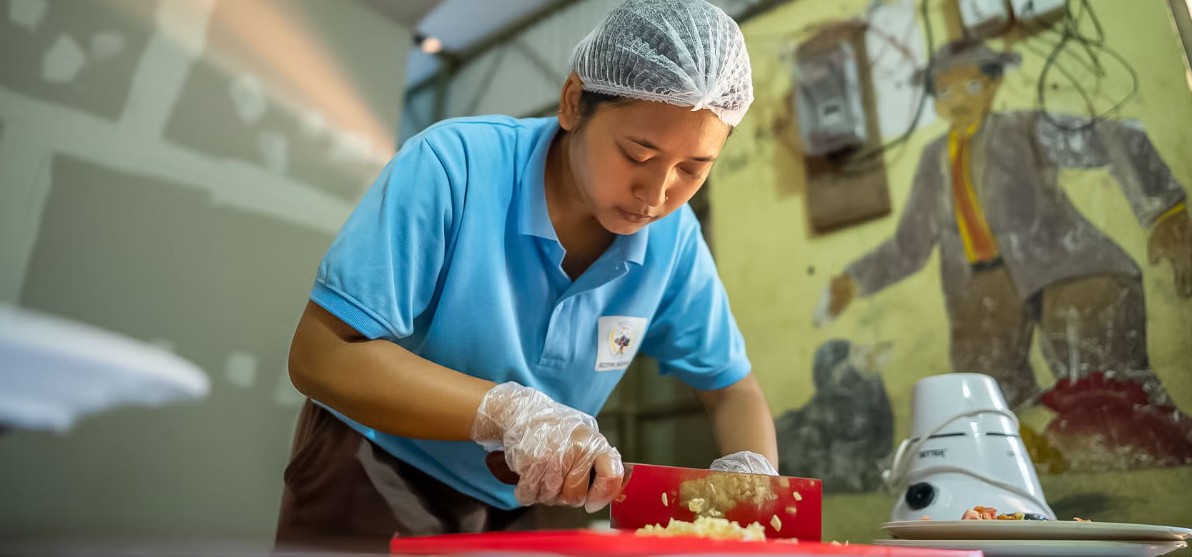
Among them is 30-year-old Reshma Ranjit, who was running a catering business with her husband before the floods destroyed what the couple had spent nearly a decade building.
Just 12 days before the disaster, Ranjit had borrowed NPR 1.2 million, or nearly US$8,000, to buy equipment and expand the business.
The flood changed those plans almost overnight.
Her business, equipment, savings and newly purchased utensils were lost as floodwaters moved through communities along the Bhotekoshi and Trishuli river corridors.
Today, Ranjit is working as the head chef of a community kitchen supported by UN Women, preparing meals for families living in temporary accommodation.
The floods have not only displaced families and damaged infrastructure. They have also created additional pressures for women, who frequently take on much of the unpaid work involved in caring for children, older relatives and other family members during emergencies.
According to the United Nations, at least 43,000 women and girls across 17 of the worst-affected municipalities require humanitarian assistance following the floods.
For women who have lost livelihoods, even basic household expenses can become difficult to meet.
The community kitchens offer a temporary source of income while also addressing an immediate need among displaced families: access to cooked food.
UN Women, working with Rural Oriented Youth Movement Nepal, the National Indigenous Women Forum and local women’s groups, has established four community kitchens in Nuwakot and Rasuwa. The Feminist Dalit Organization is also preparing to establish additional kitchens.
The model combines food assistance with employment for women from communities affected by the disaster.
The kitchens are designed to operate for between one and three months after a disaster.
A kitchen serving around 100 people can provide as many as 9,000 meals over one month, according to UN Women.
The kitchens established following the August floods have so far reached 1,145 people and provided four meals a day, with more than 15,000 meals served in two weeks.
The involvement of local women’s organisations is also significant. These groups already have relationships within affected communities, allowing them to identify families who need assistance and organise food distribution around local needs.
For women working in the kitchens, however, the work is also personal.
Sannani BK lost her brother in the floods. She is now caring not only for her own children but also for her brother’s children.
When she heard the flood was approaching, she sent her children away to safety.
After the disaster, she was left without a home and facing the loss of a close family member while taking responsibility for additional children.
Working in the community kitchen has given her an income as well as a place to work alongside other women who have experienced the same disaster.
The money she earns is helping her meet the immediate needs of the children in her care.
For women such as BK and Ranjit, the kitchen cannot replace what the flood destroyed. It cannot restore a business built over years or bring back a family member lost in the disaster.
But it provides something important during the uncertain period between immediate relief and long-term recovery: an income, a workplace and a way to contribute to the survival of their own communities.
Disaster response is often measured through the number of people evacuated, shelters established or meals distributed.
But recovery also depends on what happens to the people whose livelihoods disappear.
For women, that recovery can be particularly difficult when income losses are combined with increased care responsibilities and displacement.
The community kitchens offer one example of a response that addresses both sides of the problem — feeding people who have been displaced while creating temporary employment for women who have been affected themselves.
One month after the floods, the damage across Nepal’s affected communities is still visible.
But so is another part of the recovery.
Women who lost their own livelihoods are back at work, preparing food for people who have lost theirs.
Sometimes, rebuilding after a disaster begins not with a house or a business, but with a kitchen — and with women keeping it running.